Arsenal’s Consistency Woes Are History – Here’s Why…

Back to back wins against Jurgen Klopp’s Liverpool and Antonio Conte’s Spurs prove that Arsenal have turned a corner, answering their critics from the top of the league.

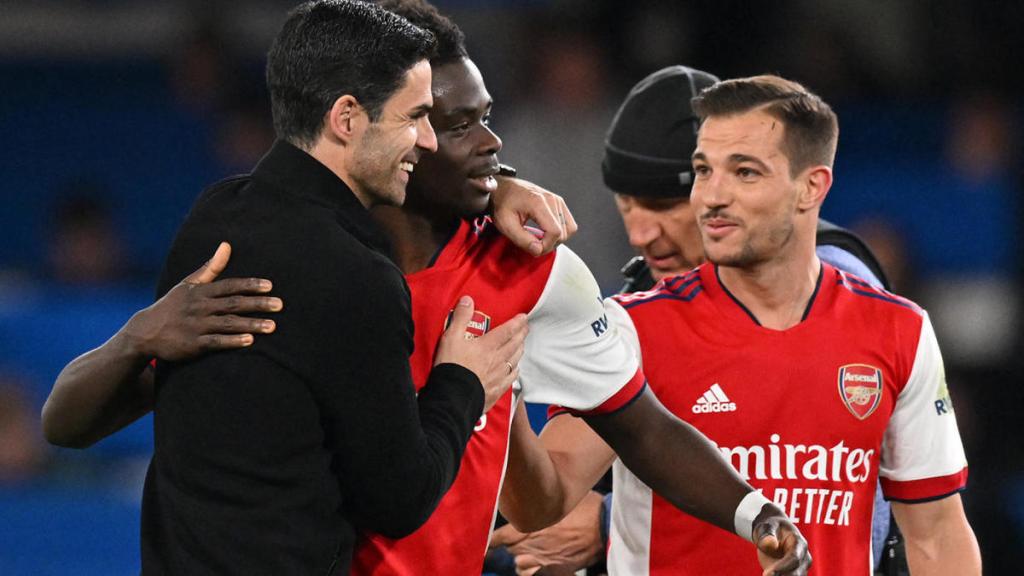
Mikel Arteta’s Arsenal have been on a positive trajectory for the past twelve to fifteen months, and during this period there have been certain checkpoints the team has reached, and had to overcome. The last couple of weeks have seen a big inspection of Arsenal’s character, but the Gunners have passed these tests with flying colours, helping to show progression from the inconsistency that saw Arsenal miss out on Champions League last season.

Both Sunday’s victory against Liverpool and last Saturday’s victory against Spurs were hard fought, and certainly not handed to the Gunners on a plate, yet Arsenal are getting over the line in the face of adversity more than they have at any point over the past eight years or so, and this is certainly the biggest improvement we have seen in this aspect under the stewardship of Arteta.

The key to this? Character.

Character is the determining factor in the recent resilience the Gunners have shown. The Emirates has long been the home of many a wizard of creativity, technical genius, or a mercurial marksman, yet, whilst fans were left entertained with easy-on-the-eye football, the final hurdle was often far too high.

Some of the finest players the Emirates has been home too since opening in Mesut Özil, Santi Cazorla, and Alexis Sanchez, were never able to consistently fight for the Premier League.
Photo: Getty Images / Stuart MacFarlane.

This is where Arteta deserves credit, serving as the link between the history, style, and excellence of Arsenal, whilst sprinkling the grit, work, and determination that the top teams cannot go without. Arteta has built a side filled with gifted talents, footballers who are mesmeric in the way they play the game, in honour of the likes of Santi Cazorla, Mesut Özil, Aaron Ramsey, and countless other beautiful footballers of yesteryear, in the form of Martin Ødegaard, Bukayo Saka, and Fábio Vieira.

The difference now? Not only do the three modern equivalents work tirelessly without the ball, pressing constantly, they are willing to do anything to help the team. Saka’s first goal from Sunday provides a great example of this, as he ran the length of the pitch following a Liverpool corner, to slide in at the back-post whilst Arsenal countered, all in the depths of first half stoppage time.

It is not just Arsenal’s maestros who are working harder though, take Gabriel Jesus as another example. Wow. The Brazilian has come to Arsenal for a big fee, from a big club, competing in the Champions League (and favourites to win it each year!) much like Alexis Sanchez from Barcelona in 2014, or Pierre-Emerick Aubameyang from Dortmund in 2018. Sanchez and Aubameyang will forever be written into Arsenal history, for their goalscoring exploits which helped to deliver trophies to the club – almost single handedly at times. Jesus in my opinion, will be remembered in the same manner, with the difference being the full package he offers, on top of his spellbinding footballing ability.

Jesus is the complete player, and one of the most impressive I have seen at Arsenal since Özil or Sanchez embraced themselves with the Emirates crowd. The 5’9″ Brazilian holds the ball up in such a way that Alan Shearer would tip his hat, and is stronger than almost all defenders he faces due to the exceptionally intelligent way he uses his body. His Brazilian flair to pluck the ball from the sky, combined with his vision and game intelligence to pick the right pass and set an attack flying is Roberto Firmino esque, whilst his skills to beat a man and light up a ground, as well as his predatory goalscoring instincts and finishing ability are a nod to that of the aforementioned Sanchez and Aubameyang, respectively.

In a way, Jesus sums Arsenal in Arteta’s vision up. A perfect mix of skill, will, and effectiveness, oh and how could I forget? The key to it all, amazing character.

Gabriel Jesus leads his teammates into battle against Spurs, his experience is invaluable for this squad, as well as his ability! Photo: @Arsenal via Twitter

This is all before we speak about a defence that is arguably better on the ball than the average Premier League midfield five years ago. Take the four that started against Liverpool, Ben White (RB), William Saliba (RCB), Gabriel Magalhães (LCB), and Takehiro Tomiyasu (LB). Three out of these four players possess not only excellent ability on the ball, with their selection, weight of pass, control and more importantly composure at an elite level, but two of the three are actually playing out of position. The ambipedal Tomiyasu is a RB by trade, but fits seamlessly in at LB, in a masterstroke by Arteta to ensure that Arsenal’s build up remained bulletproof, and could not be hurried by the onrushing, pressing four starting attackers of Liverpool. On the opposite side is CB by trade White, who has played zero minutes in his regular position so far this season, but has hugely impressed at RB, if anything receiving more plaudits than he did at CB! He is the perfect modern defender, highly capable in aerial and ground duels, positionally excellent with a superb reading of the game, whilst maintaining the elegance of a midfielder on the ball. It is a joy to watch.

When it comes to actually defending, the purists need not worry, as this group does not shy away from its main purpose. Gabriel and Saliba have formed a strong partnership, and as individuals they both display physical attributes which are vital to keep up with the pace of the modern game, whilst maintaining a gritty approach to duels with opposition attackers. Both are intelligent too, intercepting high to sustain pressure and squeeze teams, leading the rest of the back four, who have all played a vital role in the way Arsenal control games and attack this season, as highlighted in the graphic below, which shows that Arsenal have the highest combined defensive line and press intensity in the Premier League this season, which sets the tone in our games, and provides the blueprint for the way we build up, and spring consistent waves of attack.
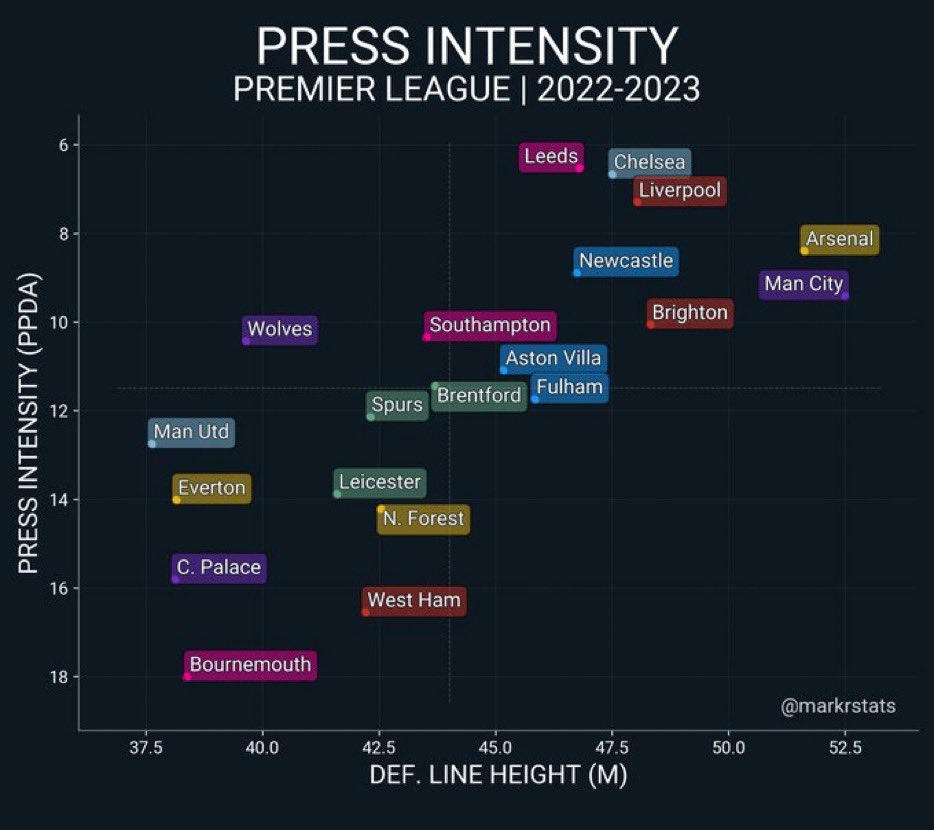
Arsenal may not have the highest line or press the most, but they combine these two aspects the best in the Premier League, and this is evident when watching. The Gunners have an outstanding work rate out of possession which supplies chances with the ball, wearing the opposition down.
Graphic: @markrstats on Twitter – Give him a follow!

However though, this high octane and high energy approach can sometimes work to the detriment of Arsenal. This team cares a lot, and that is to its credit of course, but at times I notice that we can become over-emotional, and there are certain players who may rush actions, be too aggressive, and ultimately not manage the game properly. This was certainly more of an issue last year, and led to games such as Southampton (A), Spurs (A), and Manchester City (H), where the team let themselves down after performances that had begun with promise.

The single player who typifies this change more than any, is Granit Xhaka, often criticised for his ‘heart on sleeve’ approach before, where he would occasionally boil over – even if this came from the right place. This year though, Xhaka has improved once again, and despite the fact that I have been fighting his corner for years at Arsenal, he has even impressed me with the way in which he has galvanised his teammates, certainly with the help of the professional winners recruited in Jesus and Zinchenko.

Granit Xhaka with his Man Of The Match award for his performance against Spurs, where he was brilliant again, and did not let the emotion of the day get on top of him, even after a mistake – he and his teammates are growing wiser.
Photo: @Arsenal via Twitter

Talking with some fans at a game this season, I discussed how we need to adopt the Manchester City approach to games, where their players are almost robotic in their mentality – completely unshakeable. The Liverpool game was an interesting experiment of this to me, Arsenal suffered in the game at times but played their game regardless and were never hurried. This was in part due to the technical security within the XI, but the mentality certainly cannot be understated either, and for the first time ever during Arteta’s reign, I feel that we may be able to bounce back swiftly after defeats, and that we have the character to clear our heads and not spiral into a ‘losing ‘run’, where our confidence is dented – which always felt possible before now.

This was first proved to me after the disappointment of the Manchester United loss at Old Trafford, and subsequent long wait to put said disappointment right in a tricky away trip to Brentford, after being further reenforced with the resilience shown in game situations on Saturday against Liverpool, where Arsenal were pegged back twice but still came through victorious.

These points are further evidenced when looking back to last weeks North London Derby triumph, where Arsenal blew Spurs away.

Arsenal showed a combination of all of the aspects that have provided such a huge upturn in results and performances so far this season, facing a dogged defensive unit in Conte’s Spurs, who deployed what was almost a seven-at-the-back at times, yet the Gunners held their nerve and kept their patience to break through. Arsenal are so calculated in the way they approach their attacks now, the urgency to score is rarely channelled in a desperate way, helping to suffocate the opponent, as Arsenal apply the squeeze on them, starting from the high line. This also means that once teams gain possession of the ball, they are more prone to panicking and rushing, or both, which limits the attacking threat they possess, and causes mistakes. Arsenal managed to frustrate Harry Kane, Heung-Min Son and Richarlison in Spurs’ front three, and despite them being one of the most dangerous counter-attacking sides in the world, they were unable to provide a big impact over a consistent period.

Although I hate comparisons, especially to the likes of teams as notoriously and ruthlessly brilliant as Manchester City, you can see that unless a team takes the game to Arsenal, they really struggle to play any football at all. Similarly to City as well, and a large improvement on the previous couple of years under Arteta, is the notable improvement in the way Arsenal react to set backs. A lot of times last season Arsenal would be pegged back or go behind, and at least from my perspective, there was a real worry at how the outcome would of the match would be shaped by this. After Harry Kane’s penalty though, a small period of Spurs confidence was quickly quelled again. This new positivity we are seeing from Arsenal is being massively aided by the fans too, who have grown much more forgiving and supportive.

The Spurs and Liverpool victories have also shown the vast array of weapons Arsenal now possess to hurt teams, with Xhaka and Thomas Partey striking against Spurs as the two typically deeper midfielders, before both goals came from the flanks a week later against Liverpool, there is no longer an over-reliance on one brilliant player, as we saw recently with Aubameyang for a few years.

Arsenal have scored 23 goals this season, via 9 different players – everybody is contributing.
Photo: @Arsenal via Twitter

Despite the argument that Spurs and Liverpool have not been playing great football all year so far, I believe these wins really do solidify Arsenal as a serious prospect to be reckoned with for the foreseeable future in the Premier League. Both wins were rooted in spirit from fans, players and manager alike, as well as containing many nuances to deal with certain strengths that each opponent possesses. Some questionable refereeing decisions in favour of all three teams at times across the two fixtures, should still leave fans in no doubt on whether these were just positive results, and not positive performances as well. For me, from what I see, all of the signs are positive that Arsenal are a great team, only getting better via the lessons they are learning and experiences they are having together – long may it continue!
The month (and a bit!) in Arsenal: Fighting back & falling short…

After a turbulent month which was initially crammed with fixtures, giving Premier League clubs competing in Europe their first taste of the fixture pile up which will be commonplace this season, Arsenal are back. The month was later severely interrupted due to the period of mourning observed by the Premier League after Queen Elizabeth II’s passing, and closely followed by a further two week hiatus due to the international break, but the Gunners are ready to undertake October, which will see Mikel Arteta’s side play twice a week, every week.

The Arsenal and Zurich players show their respects to Queen Elizabeth II following her passing, which was announced during the game…
Photo: AP via Marca

The Gunners remain top of the table going into Saturday’s North London Derby at the Emirates, with a strong record of six wins and one loss from the opening seven Premier League games, as well as a victory away to Zurich on match day one of the Europa League. With plenty of football having been played since my last post, previewing the Bournemouth game, I thought I’d share some thoughts on Arsenal since then – on and off the pitch.

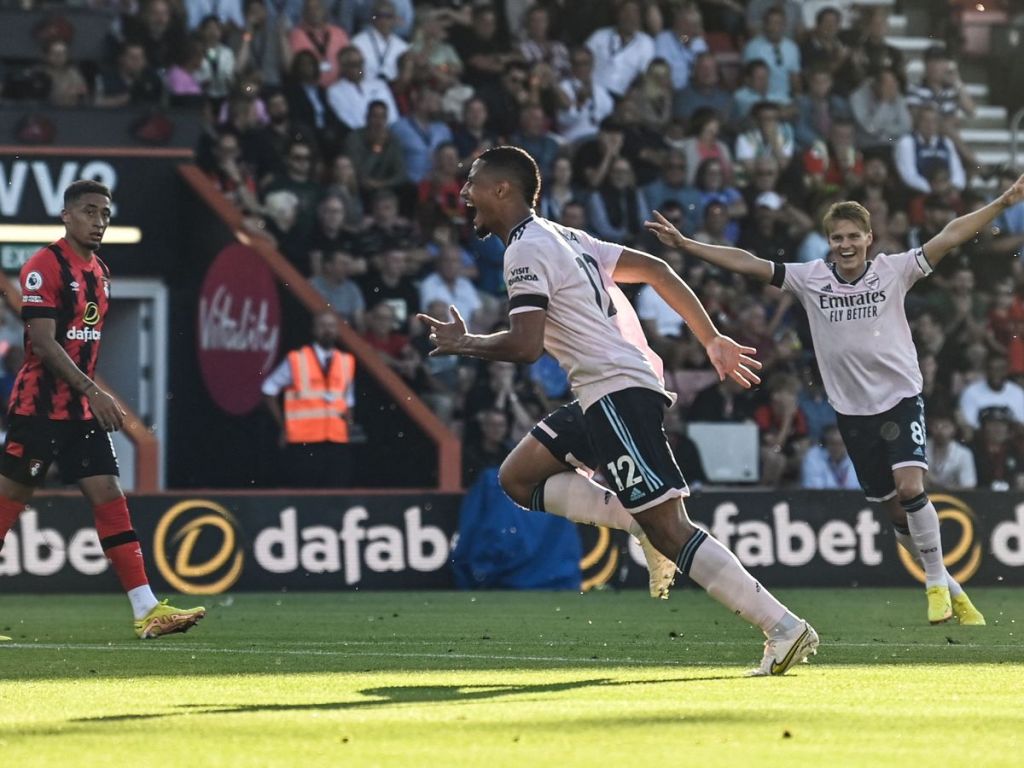
Following Arsenal’s dominant display on the South Coast at Bournemouth, which, despite the goals, most notably for me saw the inception of the Saliba / Tequila chant, Arsenal faced two varied challenges at the Emirates in late August.

William Saliba celebrates his beauty of a goal in the South Coast sunshine.
Photo: Getty Images

These came in the form of a Premier League surprise package so far, in Andre Silva’s Fulham, and a struggling Aston Villa side already desperate for points, with manager Steven Gerrard under major pressure.

Prior to Fulham, Arsenal had to bear the news that midfielder Thomas Partey was not fit and unable to partake in the fixture, giving Mohamed Elneny his first start of the season, and changing the lineup which had picked up nine points from nine, for the first time. At this point I felt the game could prove a challenge, due to Fulham’s strong belief and resolve, highlighted in their clashes against Liverpool and Brentford, as well as the strong form of Serbian CF Aleksandar Mitrović.

Adding to this was of course the fact that changes were needed to the first XI, which started to build pressure pre match to act in the transfer window, which was coming to a rapid close, on a defensive midfielder or winger.

Arsenal went 1-0 down in the game due to a mistake from Gabriel Magalhães, with the in-form Mitrović pouncing to punish.

However, this is where I was incredibly impressed with not just the players on the pitch, but the Emirates faithful. For the first time in over a decade of going to the Emirates regularly, I saw a reaction of support and encouragement from the whole ground, towards Gabriel – and the rest of the team. This was similar to the support shown to William Saliba after his unfortunate own goal against Leicester, but for me it felt more special. Arsenal were losing now, and there was only 30 minutes left on the clock. But the reaction and belief from everyone inside the ground of the red persuasion was so overwhelmingly positive that not one part of me felt as though we would go on to lose the game.

My feeling was right, as Arsenal continued to build pressure, picking up where they left off before the mistake, to punish Fulham with two late goals, the winner being scored by Gabriel himself, meaning his redemption arc was complete, providing a really special feeling within this team for me, one I haven’t had for at least half a decade. This team is not weak. This team does not give in.

As with many of Arsenal’s goals this season, it is almost impossible to tell who scored them, the team celebrate after Gabriel’s late winner against Fulham in late August.
Photo: @Arsenal via Twitter

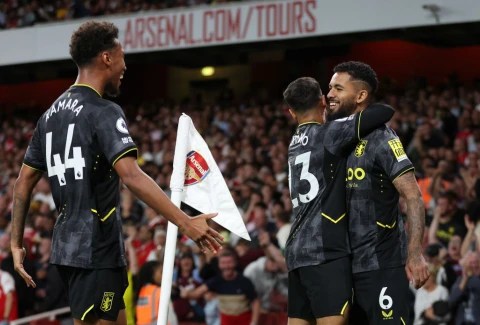
My feelings were further validated just four days later, with Arsenal piling on the pressure and assaulting Emi Martinez’s goal for 45 minutes straight, yet with only one goal to show for it, before conceding directly from a corner at the hands of Douglas Luiz to level the game, providing the heart wrenching, sink in your seat feeling you get when watching your team completely dominate a game, believing it was all for nothing.

But not this team.

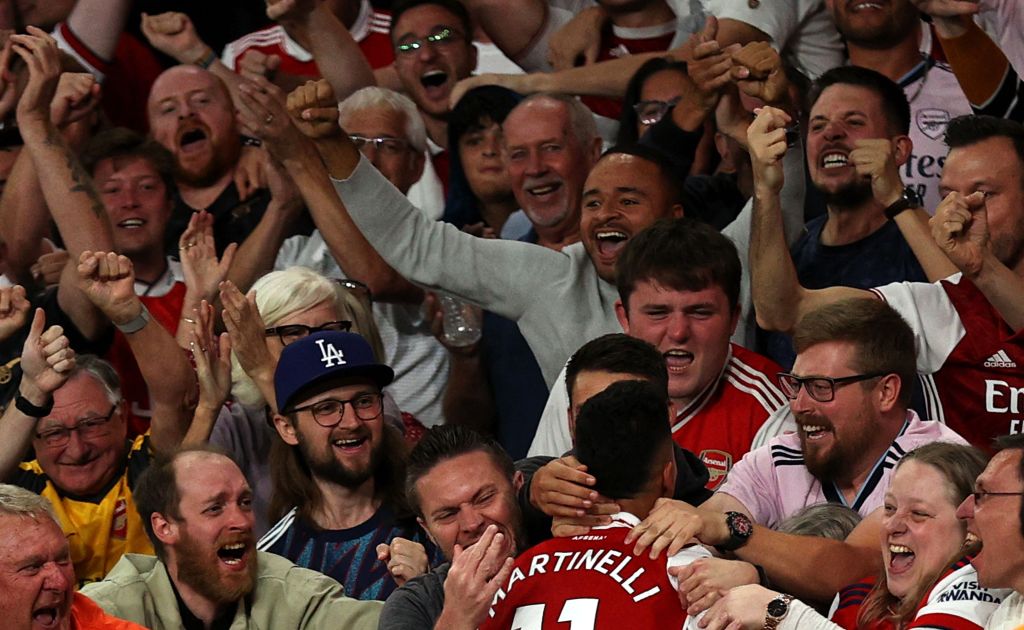
Because, just three minutes after the equaliser, with the away fans still picking themselves back up from the floor, the imperious Gabriel Martinelli demonstrated how far his game has come in the past year, taking the initiative to aggressively attack the Villa backline, crossing the ball to the back post, before seeing it returned to him to stab home viciously beyond a helpless Martinez.

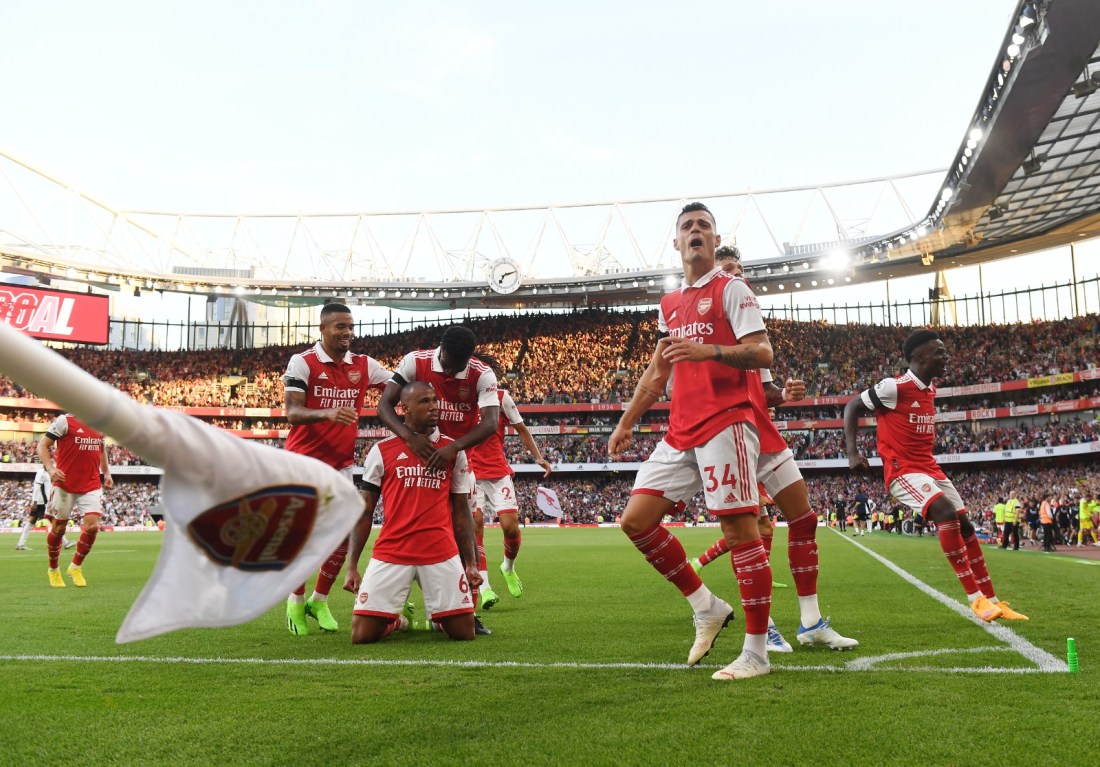
Images like this are becoming common, as Arsenal’s brilliance on the pitch is matched by some of the best home support in the league. The Emirates has been electric this season.
Photo: @Arsenal via Twitter

The transfer window… an opportunity missed?

The morning after the night before from the ecstasy of the Emirates following the Villa triumph, with five wins from five at the start of the Premier League season, was swiftly followed by some strong anxiety… in other words, the hangover was kicking in. Reality was returning to the club, and that reality was that Arsenal had under 24 hours to make any final additions to the squad, before the transfer window slammed shut.

Arsenal had a good summer by all accounts, identifying the profiles and players they wanted early, and acting on this. The issue came in two areas for me, firstly that Arsenal did not sign any players for ‘depth’ or to bolster the squad, and whilst William Saliba’s return from loan acted in this way, as well as Eddie Nketiah’s contract extension and the signing of Oleksandr Zinchenko, we never really added experienced backup in midfield – in a season with an unprecedented fixture list awaiting us.

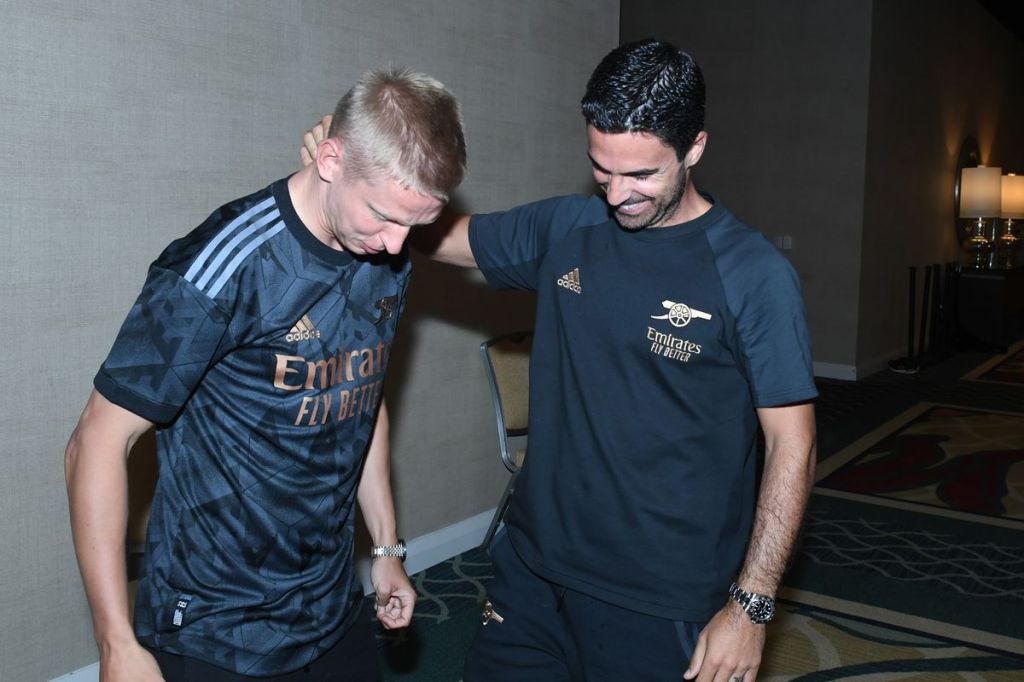
Zinchenko and Arteta embrace one another, not many would have imagined when the Ukrainian signed that he would be Arsenal’s last piece of business of the summer!
Photo: Getty Images

Secondly, Arsenal ‘missed out’ on a main transfer target in Raphinha, and in the style we have seen from this current regime of Edu Gaspar, Mikel Arteta, Tim Lewis, and Richard Garlick, the club did not panic or rush into signing someone, and instead held firm. However, whilst there are certainly plenty of positives in the way Arsenal now handle transfers, the inaction after the aforementioned main winger target Raphinha snubbed The Gunners and fellow London side Chelsea for a move to Barcelona, meant that going into the final day of the window, fans were still slightly worried about the depth of the team, with a gruelling Thursday – Sunday schedule beckoning.

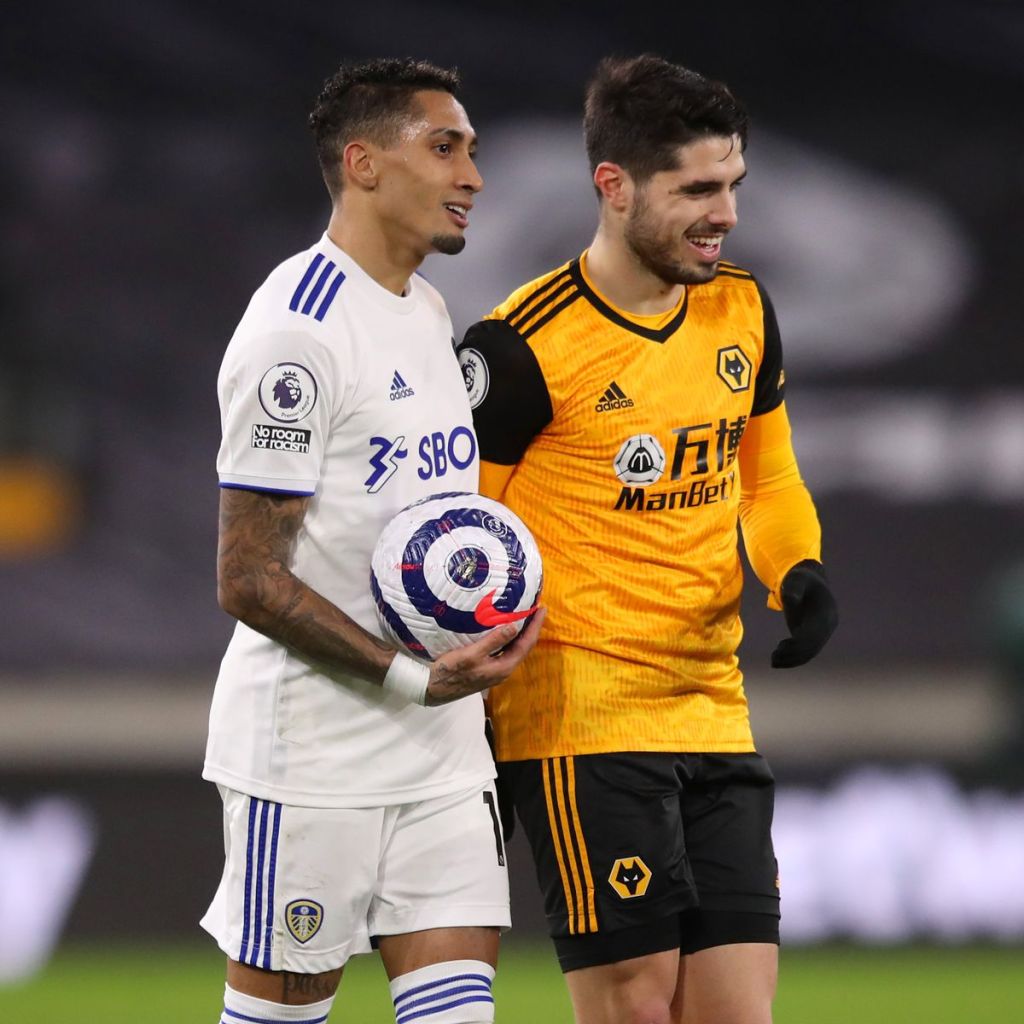
Wolves’ Pedro Neto was a name that was linked heavily with a move to North London, with reports suggesting that the deal was actually quite advanced, believable and in line with the way Arsenal have been operating in the past year. Adding to that the involvement of notorious Portugese agent Jorge Mendes, and fans were confident up until deadline that a move was possible, but this optimism was snuffled out after many reliable outlets revealed the £50M price tag was just not as high as Arsenal were willing to go to secure the Portugese.

The two that got away? Both Raphinha (left) and Pedro Neto (right) were heavily chased by Arsenal, yet neither will play their football under Mikel Arteta this season.
Photo: Getty Images

Even more anxiety-inducing for the Arsenal faithful was the fact that in Partey’s absence via injury (something we have come to expect), Elneny, who had been covering was also now injured, prompting the lesser experienced Albert Sambi Lokonga to be thrown in to the Villa clash, and eventually firing Arteta’s side to make an out of character late dash in the market, for Aston Villa and Brazil’s Douglas Luiz, who had briefly sunk Arsenal hearts not even twelve hours earlier! However, this proved to be too big of a deal to complete so late on, and with Leicester’s Youri Tielemans also a target throughout the summer, it would not be unreasonable to speculate that Arsenal missed out on one or possibly two more positions worth of new players during the summer.

Douglas Luiz doesn’t have to move to be embraced by his teammates, after scoring from the corner flag to level the score against Arsenal…
Photo: Getty Images

Even as I write this article, Arsenal are continually linked to the two midfielders currently plying their trade at the Midlands outfits, and a move for one of the pair in January seems highly likely. However, this obviously does not help to cope with the strain that will be faced by the Arsenal squad until the World Cup in November, and as the window closed with no fresh faces since the completion of Zinchenko’s move from Manchester City on the 23rd July, fans were growing concerned.

Old Trafford Blues

The following weekend saw these feelings arguably validated by Arsenal, as a polarising game with plenty of positives ultimately handed bitter rivals Manchester United all three points in Manchester.

The Gunners arrived with the same lineup that started against Villa, with the only difference coming at LB, as Zinchenko returned to keep Kieran Tierney sidelined. Arsenal began the game fairly slowly, and United were able to use the crowd to control the attacking side of the game, despite this Arsenal never looked flustered, with the key being the composure and technical prowess of the new look back four. The turning point for the whole game soon arrived, giving an early lead to the Gunners, as captain Martin Ødegaard dispossessed Christian Eriksen in the middle of the park, freeing Saka to play a gorgeous defence splitting pass to Martinelli, who finished with aplomb. Unfortunately though, this eventually handed United a bigger boost, as after a long VAR review, the goal was disallowed, with Ødegaard deemed to have fouled Eriksen in the build up.

Despite some further domination, United took the lead via new £86M recruit Antony, with Arsenal providing him the perfect way to start his Manchester United career – a specialism of this club over the years. Despite this blow Arsenal heads did not drop, possibly due to the culmination of superb support they have received when faced with challenges so far this season. Arsenal sustained pressure well, with adaptations in their attacking play to hurt United. These included long balls to Jesus, who was wonderful on the day with his hold up play, acting as an archetypal #9 to pluck balls from the sky effortlessly before building an attacking move. Ødegaard and Saka combined intricately, giving opposing fullback Tyrell Malacia a hard time, whilst Martinelli ensured Diogo Dalot was unable to effect the game in an attacking sense, consistently running beyond his man.

Antony slots past Aaron Ramsdale as he starts his Manchester United career perfectly.
Photo: Dave Thompson / AP

The varied attacking bombardment eventually paid off for Arteta’s side, who notably started the second half magnificently, with Saka slotting into an open net after Jesus poked the ball to him following a brilliant pass from Ødegaard.

However, after this goal Arsenal seemed to ease off slightly, for want of a better term. The intense approach which had suffocated United until now was suddenly abandoned, and in came a slightly more passive passage of play, which gave initiative back to United. It is hard to say exactly why this happened, it did not appear to be a tactical instruction, to me it seemed as though the inexperience of Lokonga holding the base of the midfield down, partnered with the intelligence of Eriksen exposed the core of the Arsenal team.

Mikel Arteta speaks to Gabriel Martinelli on the touchline at Old Trafford. Arteta was criticised for his approach to the game, the openness of the team, and his substitutions.
Photo: @Arsenal via Twitter

Arsenal’s midfield has seen Granit Xhaka attacking far more, ditching some of the defensive reliability of a double pivot for added attacking thrust, and combined with an Ødegaard performance reminiscent of some of those we saw towards the back end of last season away from home when out of possession, the inexperienced Lokonga, and inevitably Arsenal, suffered.

Bruno’s ball for the second goal was far too easy to play to Marcus Rashford, making his run to stretch the incredibly high line of Arsenal, with a vacant midfield in front of them, providing so much time on the ball to United’s creators. The goal was a shocker simply put, and had thrown away such a large period of domination via pure naïvety.

Worse still, is that the United third which buried the game was almost identical, and I would argue even more shocking than the second, the Arsenal defensive line and structure looking like it had been formed in a school playground. A strange feeling, after the defensive unit had looked stronger than ever, yet capitulated entirely, surrendering three points. Gary Neville was admittedly impressed by Arsenal on the day, yet pointed to Arteta’s gung-ho triple substitution, arguing the game would be entirely unbalanced in one teams favour after the changes – and in this case United prospered.

Yet, I am not too sure I blame the substitutions, possibly the third goal was scored when the players were still organising their shape, and giving Fábio Vieira his first Premier League minutes here could have been something of a baptism of fire, but principally Arteta did not simply abandon his structure, or panic as some would suggest. On the flip side of that though, it has been almost a month since the game, and I am still a little confused at what went on – but I do feel the confidence of the high line partnered with the absent midfield made it easy for United, a lesson that if you do not always squeeze the opposition in the Premier League, they will hurt you.

Arsenal’s following game was the group opener of the Europa League, away at Zurich, where a 2-1 win was collected, kicking the group off nicely. Eddie Nketiah and Marquinhos were the scorers and providers for each other’s goals, which were well crafted – yet the evening was marked by the death of Queen Elizabeth II, which was announced by Buckingham Palace during the game.

An important response on the horizon?

Arsenal had bounced back from the United defeat via the Europa League, but the real test was to see if the Premier League momentum had been halted, yet on the following day it was announced Arteta’s side would have to wait a while to see if they could get back on track – with the weekends Premier League fixtures being postponed as a mark of respect.

Extra time on the training ground maybe, but if the best way to rectify a bad result is by playing again, an unwelcome gap that was now forming between fixtures, with added uncertainty for games in Europe and the Premier League in the week after due to concerns around public safety and policing numbers. This all seemed to come at the worst possible time for Arsenal, their first blip in momentum would now be followed up by a two-week gap in Premier League football – with the next fixture a trip to the GTech Community Stadium to face Brentford, a ground and team I likened to former Premier League nuisances (I mean that with full respect and praise) Stoke City.

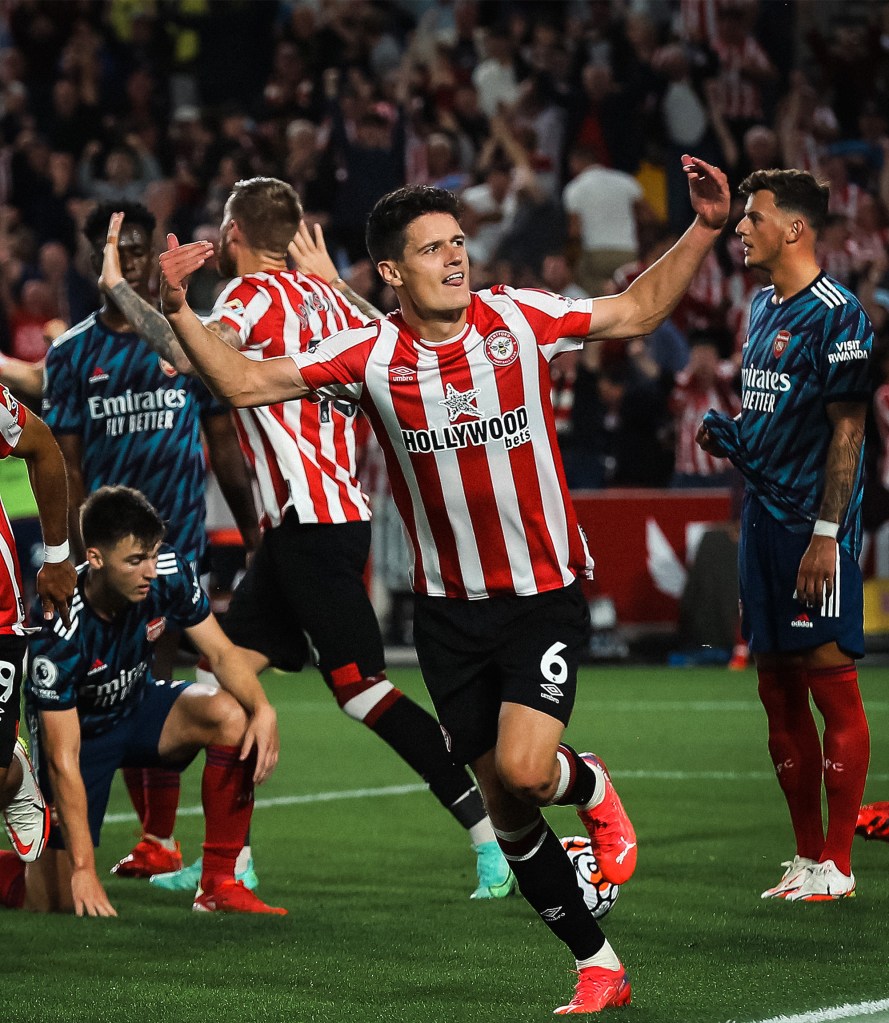
Nobody needs reminding of the beating Arsenal took in West London to start the 2021/22 season, last August. This helped put Brentford on the map and made them feel part of Premier League furniture instantly.
Photo: @BrentfordFC via Twitter

Brentford (much like Stoke), play a game you do not want to play, particularly as a possession based side. The football is physical, a back three of physically imposing, intelligent defenders is employed, the signing of former Burnley captain Ben Mee this summer proving my point. This is combined with quality on the ball, particularly from goalkeeper David Raya, who has been an Arsenal target at many points over the last few years. A relentless midfield and tireless wingbacks with quality in their deliveries to forward duo Ivan Toney and Bryan Mbeumo (who work their socks off all game) combine to make a stubborn opponent. All of this is dictated by manager Thomas Frank, who will act as anything from cheerleader to the crowd, or tactician in the dressing room to ensure a result.

Arsenal of all teams know this better than anyone, due to the season opening disappointment of last season, where Brentford really announced their style and intentions in the league in the way they defeated Arteta’s team – which was decimated by COVID in fairness (a detail often left out, despite this games continual reference).

Knowing this, Arsenal really did need to bounce back from not just the United result, but the performance, defensive frailties just would not do. However, in yet another demonstration of character Arsenal did this perfectly. I feel this was our best overall performance of the whole season, a masterclass in how to dominate a team which are seldom on the receiving end of such a one sided game.

From the first minute where the outstanding ever-present of Xhaka worked with Martinelli to create a strong opening, Arsenal won every duel, showing the sturdy nature of this side, before opening the scoring, when Saliba rose the highest to head a corner home magnificently, beating Brentford at their own game, physically dominating on a set piece – a moment which really summed up the transformation of just over a year at Arsenal.

After the lead was established, it was not threatened at all, thanks to the quality of the performance and the control demonstrated. Xhaka’s inch perfect chipped ball which was headed home by the lively Jesus was a combination of Arsenal’s technical and physical prowess, and superiority on the day. The result was finalised with Vieira’s real introduction to the Premier League, as he beautifully curled an effort from outside of the box, bending the ball beyond Raya on his near side, off the post and in.

Some of the best performers on the day embrace Fábio Vieira after his stunning goal to kill the game against Brentford.
Photo: @Arsenal via Twitter.

A big response was required, and this was the perfect response.

Rhythm would be a fine thing…

Once again, Arsenal were met with a momentum killer, this time in the form of the international break, providing yet another anxious wait to fans, as well as killing the good feeling after such a strong result.

With the North London Derby edging ever closer, it may feel strange jumping straight back into that game. An early Saturday kick-off slot does not help this situation, with these games notoriously a lot slower and less intense, from a playing and fan perspective. However, if there is one game that can throw this trend out of the window, it is the North London Derby.

Arsenal may have actually benefitted from the break, as Tottenham stars Hugo Lloris and Dejan Kulusevski are set to miss the game via injury, Kulusevski’s injury being sustained with his native Sweden. Arsenal have not suffered the same fate, and are not currently nursing any new injury situations as a result of the international break, although it was confirmed yesterday that Emile Smith Rowe will miss multiple months of football following surgery to help a recurring groin problem, which is a huge upset for the youngster who has had to play a bit part role for various reasons over the past year.

As for the North London Derby, this particular fixture coming off the back of a two week hiatus to club football, and a month of disruption almost requires no words. The players, the managers, the pundits, and of course the fans all know what this means, and the game should provide the perfect reintroduction to the Premier League, as one thing these two North London foes will agree on, is that this derby is fuelled with pure hatred and passion, and this never fails to reveal itself on the pitch.

I expect a strong performance from Arsenal, anything else and I would be lacking faith, as this squad have really shown us they are serious, that they care, and that most importantly, they are an exceptional football team. The main aspects that must be avoided are indulging in any over-emotional moments of the game, as Antonio Conte and therefore his players will be looking to antagonise what is admittedly a squad that wear their hearts on their sleeve, possibly sometimes to their detriment.

Antonio Conte seemed to exude confidence in the way he spoke before and after the last meeting, as well as in the way his team performed on the day the last time the two teams met. I have a feeling this time could prove different though.
Photo: Getty Images

As well as this, the midfield battle will be key, although it is a worry that due to Kulusevski’s absence and Conte’s want for a result at a ground where Spurs only ever seem to suffer, it has been rumoured by reputable and reliable Spurs outlets that he could pack his midfield into a congested three, and a five man line with the wing-backs included. This allows Harry Kane and Heung-Min Son to cause problems solely focussing on stretching the defence, as well as a possible muting of our bright midfield. This battle will be crucial and will certainly decide the game in my eyes, barring Arsenal showing any sorts of naïvety as previously discussed.

My last irrational fear is one where Arsenal are able to dominate the game, but will come away bruised and frustrated, reminiscent of the top four deciding game back in May… I am not one to say we dominated proceedings on that night, but it felt very “this is a results business” V “the better football should win” in the philosophies adopted by the managers, and that typically only ends in one way in my experience. In other words if Spurs have two shots on target, two goals and I leave the ground ranting angrily, I may not be that surprised or even angry at the performance, simply the result.

We need Spurs to hire a poet type manager sooner or later, this Jose Mourinho, Conte, Kane and Son era has given me far too much overthinking to do regarding possible xG cheating.

Roll on Saturday!

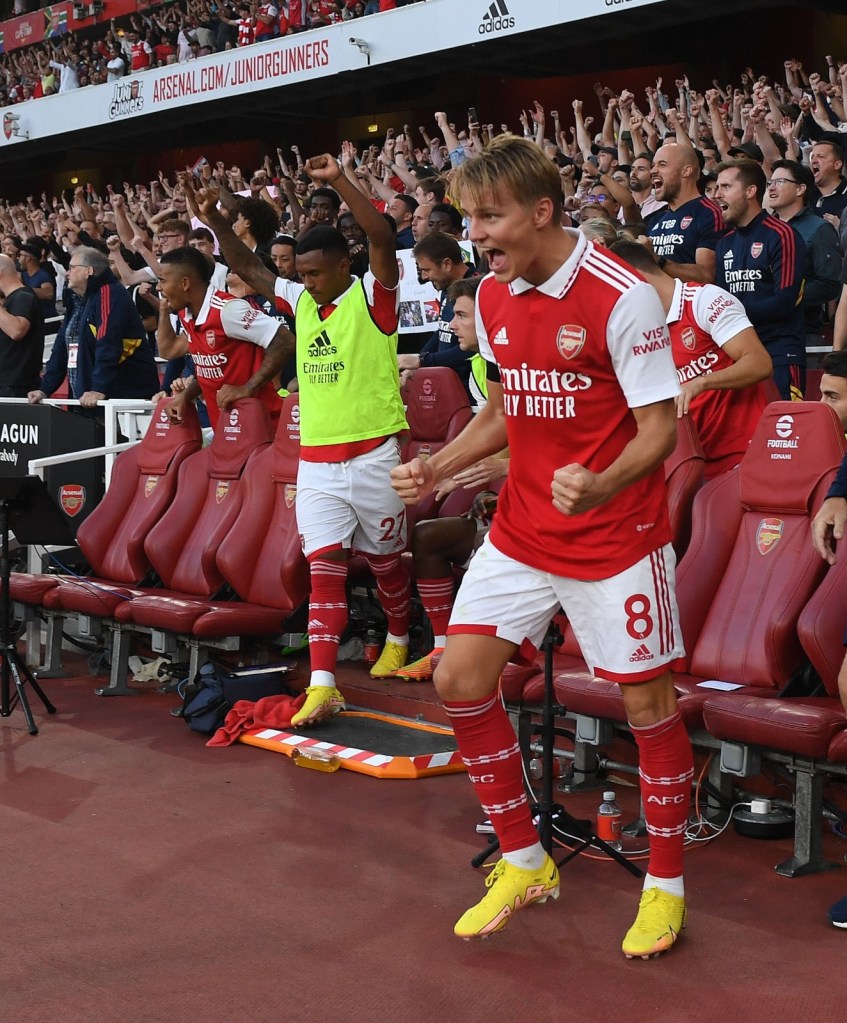
A final picture to highlight the feeling at Arsenal from manager, to players, to staff, to stewards, and vitally to fans! This type of support will go a long way in ensuring a positive result for Arsenal on Saturday, and I am sure the Emirates will not disappoint. Photo: @Arsenal via Twitter.

Match Preview: Crystal Palace v Arsenal.

Friday, August 5th, 2022 Selhurst Park Kick-Off (UK): 8PM – Live on Sky Sports Match Officials: Referee: Anthony Taylor. VAR: Darren England.

Arsenal once again have the duty of raising the curtain on the latest Premier League campaign, with a visit to Selhurst Park kicking off the 2022/23 season on Friday night. Hosts Crystal Palace will be entering their tenth consecutive season in the top flight, and as Premier League regulars, they will know exactly how to deal with the occasion. The Gunners will be looking for an opening day victory in the Premier League, after this alluded Mikel Arteta’s side last year at the hands of Thomas Frank’s Brentford. This is the fifth time that Arsenal will be involved in the first game of a new Premier League season, with a strong record of three wins and one loss in this scenario.

The prospect of a London derby to begin the season is exciting for the neutral, however Arteta’s side will certainly have to be cautious, as Selhurst Park in particular has proved to be a tricky ground to visit in recent memory for Arsenal, winning just two of their last six visits to South East London, with the latest loss being a heavy 3-0 defeat back in April, which inflicted major damage on Arsenal’s hopes of finishing in a top four spot last season. Combining this with the brilliant form of Patrick Vieira’s Palace last season, that saw the Eagles visit Wembley in an FA Cup semi-final, and finish in style with a run of six consecutive home games unbeaten, in which they kept five clean sheets, and Arsenal will have to be careful not to fall at the first hurdle on Friday.

How Arsenal can avoid opening day upset…

With Arteta yet to defeat Vieira in his two managerial meetings with the Arsenal invincible, a new plan will be needed to overcome the failures of old. The main issue with our performances against Palace last season came from a lack of maturity and intensity at times in both games, and despite a great show of resilience to claw a point back at the Emirates in the 95th minute back in October, leaving it late will be the last thing on any Arsenal fans mind for the first game of the season.

In the aforementioned home fixture, Arsenal did not struggle to control the game per se, dominating the attacking statistics, but showed a real naïvety when the ball was lost, particularly in the final third. Whilst it is true that these were the early days of a move away from a 4-2-3-1 shape for the Gunners, meaning certain dynamics such as Emile Smith Rowe as a #8 and the lack of proper spacing between players were teething problems that had not yet been resolved, the performance allowed an easy counter-attack which Vieira’s team, spearheaded by Jordan Ayew, Christian Benteke, Odsonne Édouard and later Michael Olise, took full advantage of.

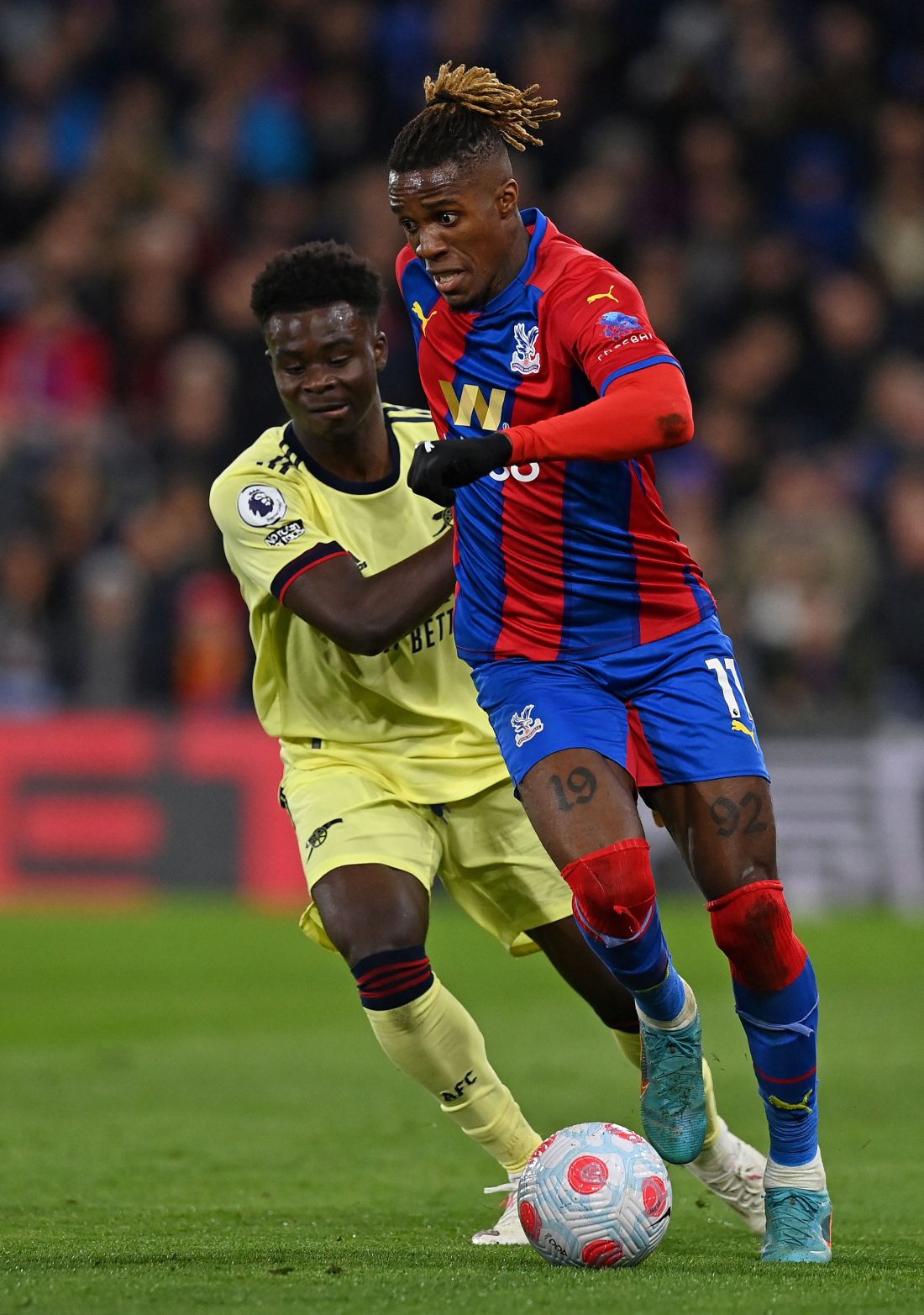
Once the sides met again in April, Arteta’s switch to a fluid 4-3-3 was no longer in its infancy, and the confidence amongst the fanbase and team reflected this, with the system bearing fruit for Arteta’s men. Simultaneously though, Palace had improved themselves, with Wilfried Zaha returning to be a key player, as well as Jean-Philippe Mateta and Olise announcing themselves as mercurial talents, and key bows to the Crystal Palace arrow. On this night, Arsenal’s downfall was no longer about a misunderstanding of tactical instruction, but more a capitulation under the lights on a Monday night, where Palace outfought, and out-thought us. The intensity on the pitch was low from kick-off, and the game had an end of Arséne Wenger era feel to it, with players struggling to win first or second balls, getting passed around and dribbled past with ease, and showing a lack of an organised press – which contributed to CB Joachim Andersen’s second assist of the game, so it was no surprise that within 30 minutes we were 2-0 down. A second half penalty sealed our fate, and the difference from October was the dominance in the Palace performance, rather than the weakness in ours. Another toothless performance come Friday and we may as well forget about a positive result, as Palace will have their fans right behind them, and early in the season one off ‘surprise’ results are far from infrequent.

Fast forward to August from the dismal night in April and Arsenal’s system has kept refining itself since, and with our new players, new combinations, and ever-improving confidence, the game has a fresh dynamic. Since we have had the full compliment of players that we will take into the game on Friday, in Gabriel Jesus, Oleksandr Zinchenko, and returning loanee William Saliba, Arsenal have scored ten goals and conceded none in two games to first Chelsea, and then Sevilla, and whilst this may be pre-season, which I do not bother drawing too many conclusions from, the team has played with a noticeably better freedom and fluidity. Players are interchanging all over the pitch, everybody has a brilliant understanding, and the rotations and patterns of play are gorgeous, as well as proving to be very difficult to stop.

I have talked in more depth in my season preview about our new signings and players that I believe will particularly impress this season, but in a few words, Jesus has opened endless possibilities in comparison to last season, as his link up, dribbling, pace, finishing and shot creation is worlds above that of Alexandre Lacazette. Saliba’s return and new recruit Zinchenko both bring a lot of the same improvements to the team, with both hugely lifting the composure and technical security of our defence whilst being astute defenders. Saliba allows for cover across the backline in the form of Ben White shifting to RB, whilst we wait for the injured Takehiro Tomiyasu to make his return – however this is far less urgent now. Zinchenko also provides cover for the injured Kieran Tierney, with the Ukrainian providing calmness in possession, and the ability to both overlap and invert effectively – making him much harder to pick up.

These improvements in defence and attack alone make it less likely that the same mistakes from our last visit will reoccur, as we notably failed to have any high quality attempts on goal, with Palace defenders Andersen and Marc Guéhi marshalling Lacazette expertly, with his lack of physical qualities making it an easy day at the office for the pair. As well as this, Cedric and Nuno Tavares serving as the two fullbacks on the night were incredibly erratic on the ball, often hoofing it long which only served to rebuild pressure from Palace and their fans. Both also struggled to deal with their respective wingers, and with the quality of Vieira’s wide-men, this caused dangerous situations frequently. In midfield, unfortunately new recruit Fábio Vieira will miss out as he has a slight injury, however Arsenal still boast an incredibly strong trio of midfielders for the trip, who have only grown in their understanding of the roles they are tasked with.

With that, as long as Arsenal play their game, and avoid the mistake of letting Palace set the tone with the crowd behind them, I believe from a footballing point of view we have got what it takes to be dangerous enough going forward, whilst frustrating the Palace attack enough to prevent a similar scoreline as last season. Arsenal will have to be cautious on set pieces, as Palace are a real threat in these situations, having the players to win plenty of fouls, and despite our strong record on corners in particular last season, giving any team dead ball situations can help to build confidence, at the very least. This game will be the biggest test for Arteta’s side until the trip to Old Trafford in early September in my view, meaning a positive result here would be massive for the confidence of this ever developing side. A negative result would not be followed up by tough consecutive games as it was last season, but ultimately if Arsenal want to achieve their goals, a win is all that will do.

How Vieira can get Palace purring against his former side again…

Discussing how Arsenal have improved and will provide a new set of challenges for the Eagles on Friday in isolation can skew reality, and it must not be lost that Palace have had a positive few months since the sides last met too. Palace certainly make use of the feeling they get from a game when playing against Arsenal, and this stretches back to the 3-0 embarrassment of 2017, where Sam Allardyce’s team rampantly bullied Wenger’s collapsing Arsenal, as if the crowd were telling the players what to do telepathically. The energy generated by the faithful “ultras” of the ground will be no different on Friday, and the electric atmosphere the fans help to build will be a major factor in not just this game, but all games at Selhurst Park this season. The side boast the strong home record mentioned prior for a reason, and if Arsenal are not at their very best, I am certain that Vieira will utilise this and incorporate it into the way his team approaches the night.

Palace under Vieira have deployed a fairly traditional 4-3-3, however there are plenty of tactical nuances to this system, and each player has a well defined role, particularly from an attacking sense. Going from front to back, the South London outfit have not been scared to utilise three traditional CF’s across the frontline, with Ayew the clubs official #9 often finding himself on the touchline of the right flank, Benteke still rotating as a useful starting CF, and Edouard playing from the left. This is because when Palace attack, the LW often tucks in, almost forming a two man strike partnership of yesteryear with the defined CF. Ayew can hold his width and is often supported by what was the busy RCM of the midfield three last season in Conor Gallagher – who has since returned to Chelsea after his loan spell – which may cause some tactical tweaks to the system. Where the LW in this system often tucks in, young English LB Tyrick Mitchell is tasked with stretching the pitch, staying as high and wide as possible. The fullback got his first senior England call up last season, and has a notably strong ability to keep possession and deliver the ball from wide, whilst acting as a ‘stopper’ style traditional fullback.

Anchoring the midfield has been a mixture of Cheikhou Kouyaté – who has now left the club, Will Hughes, and Luka Milivojević, with these players ordered in how many Premier League minutes they played last season. To the left of this deeper midfielder is often a ‘busier’ box to box style player, as despite Gallagher’s tenacity, his focus was more offensive. This player comes in the form of Palace veteran James McArthur, as well as Jeffrey Schlupp, who are both willing runners, providing the squeeze on opponents, harassing them into making quick, rushed passes. The side then form something of a back three to accommodate captain Joel Ward’s strengths, with the excellent Guéhi and Andersen partnership joining him.

Another note to make about that pair is the brilliance of their passing – particularly over long distances. This combined with a physically capable set of tall attackers in a front three is perfect for getting from back to front quickly, as not many defences can deal with this bombardment. Palace do not boast an amazing pass accuracy percentage, neither do they play what would be traditionally ‘beautiful’ football, however the pace at which they act with the ball is frightening, whether it be a long ball to a forward, quick give and goes through midfield, or the sight of Zaha and Olise dribbling in full flow, they have plenty of ways to flex their attacking might. The combination of pace in attacking movement, as well as the high press and squeeze which can shrink the old school pitch of Selhurst Park will be a danger for Arteta to consider, and whilst Arsenal will certainly not want to surrender possession via long balls, they will need to be accurate, composed, and communicate well when building up to avoid any mishaps.

Vieira’s Palace tactics are hardly reinventing the wheel, however they have strong principals, rooted in the era where Vieira graced the Premier League as a player, with a modern twist. As well as these principals on the pitch, Vieira has created something far deeper and long term at the club. Palace had been stagnant ever since the 2018/19 season, with star players often departing, leaving an ageing squad in their place. Despite the ownership at the club taking an active interest and chairman Steve Parish being a boyhood fan it was simply too risky to get rid of Roy Hodgson and these players, as whilst stagnant the formula was ensuring Palace’s Premier League survival season after season. Following Hodgson’s retirement from management though, Palace were forced to switch their system around, and following nine senior players leaving the club in the summer of 2021, Vieira took charge, and has become a part of the family, with the Frenchman taking an interest from top to bottom, even watching academy games regularly. Vieira is becoming a figurehead at the club, and with such a strong crop of talented players, both past and present, beginning their careers at The Academy – which received a £20M rebuild in 2021, there are exciting times ahead.

However, there may be a slightly bitter taste in the mouths of Palace fans following Gallagher’s move back to Chelsea at the end of his loan spell. The 22 year old had an outstanding campaign for Palace last season, with the all action midfielder epitomising the style that Vieira wishes to imprint upon his side. The Palace faithful fell in love with the young English midfielder, and will be nervously awaiting to see if any of the solutions to his vacancy can replace his impact.

Of these solutions are two more under-25 midfield talents, in the form of Ebere Eze (24), who spent the entirety of last season out with a bad injury, yet has seen plenty of action under Vieira in pre-season so far, and new signing Cheick Doucouré (22), who arrived from Lens in Ligue 1 for £22M in July. Whilst the profiles of both of these players does not replicate Gallagher’s directly, we could see a shift to a double-pivot from Vieira’s side, with Eze lacking the defensive work rate to be a box to box in the Gallagher mould. The upside though, is that Eze is as silky on the ball as they come, and I believe he will help Palace retain the ball better, pass with a vastly improved accuracy and create more chances from open play. Doucouré would also suit my proposed formation change, as he is suited to a deeper position, however the sky is the limit under Vieira, who told him “I’m going to make you better. I know your game, I’ve known it for a while, so I know what you need”.

Another area of concern for the Palace faithful, will be the messy pre-season the club undertook this summer, with the squad essentially being split in two, with just eight senior outfield players having travelled to Singapore and Australia for a tour that was due to commence ahead of the 2020/21 season, but was halted due to the COVID-19 pandemic. Whilst the foreign tour has been revealed as a big money maker, and positive for brand exposure too, it is far from ideal for squad cohesion of new signings, amongst other purely footballing queries. Zaha, Eze, Guéhi, and Olise all remained on English soil and whilst the 26 man squad was filled with young, hungry players for Vieira to keep his eye on ahead of the new term, as well as the pre-season both on UK soil and abroad yielding positive results, you would think the idea may have just added unneeded confusion and stress to preparation for Vieira.

Predicted Lineups:

Arsenal:

Injuries: Emile Smith Rowe (Groin), Fábio Vieira (Ankle), Takehiro Tomiyasu (Thigh), Kieran Tierney (Knee).

Suspensions: N/A

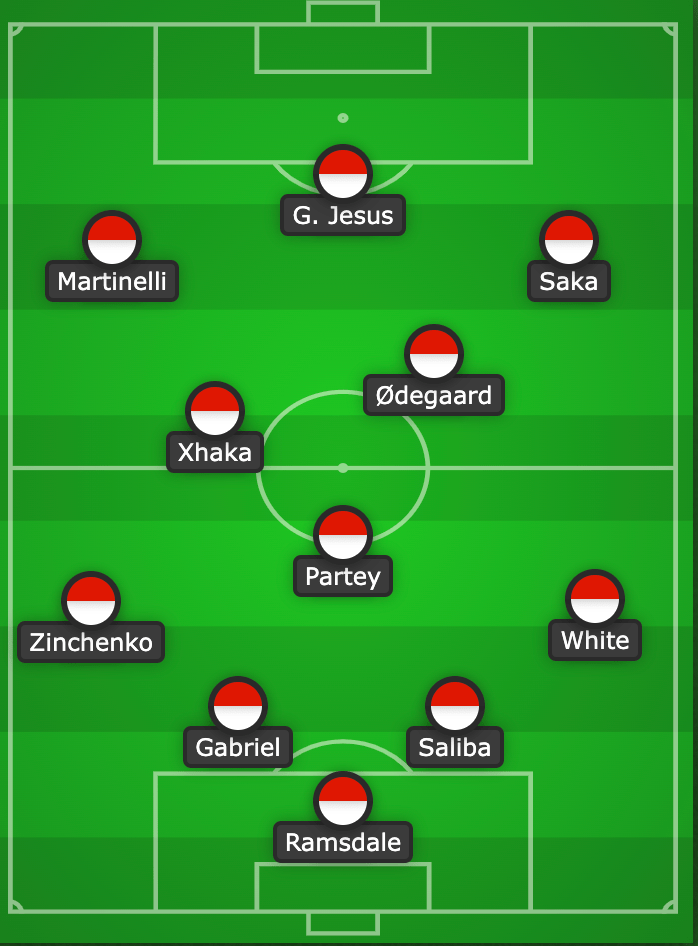
As previously discussed, Arsenal will retain their 4-3-3 on Friday. The team practically picks itself, through a combination of reliable quality, and some positions that are injury hit. After Bernd Leno’s departure to Fulham on Tuesday, there is no doubt that Aaron Ramsdale will start – that is if there was any doubt cast in your mind anyway. The back four sees new boy Zinchenko in, as Nuno Tavares left the club for a year long loan move to Marseille on the weekend, and Tierney is still nursing an injury which kept him out at the back end of last season. Ben White starts at RB, following his spell here in pre-season, where he played with excellent authority over the position. Tomiyasu has a chance of playing, as he looks likely to return soon, but I don’t see it myself on Friday. It would be throwing him in at the deep end facing up to Zaha when he would just about pass as available for the game.

Thomas Partey starts at the base of the midfield three, despite the Ghanaian being in the midst of a legal battle which turned incredibly public via Twitter last week. The club seem to have a clear stance which will not be unchanged, which is to support Partey, meaning unless in the eyes of the law his situation changes, he will continue to be picked, however that is received by fans. Xhaka has featured heavily in pre-season, and his typical reliability will be useful in this game. As for Ødegaard, the new official club captain is a guaranteed starter without question, and it will be interesting to see if the Norwegian can forget his woes from this fixture last season. The front three has two of our finest players in Jesus and Saka undoubtedly starting, supported by new #11 Martinelli, who due to Smith Rowe’s injury, has an opportunity to make that LW spot his own.

Crystal Palace:

Injuries: Sam Johnstone (Quadricep), Jack Butland (Hand), James McArthur (Hip), Michael Olise (Ankle).

Suspensions: N/A

As for Crystal Palace, I have opted for a 4-3-3, as this was Vieira’s preferred lineup last season, however with the new midfield profiles I would not be shocked by a 4-2-3-1 shape, which could see a re-shuffle in midfield, with Schlupp coming out of the side for Hughes to partner Doucouré. Regardless though, Eze will certainly be gifted with a free role, with his main challenge to create chances and keep Palace ticking over against an Arsenal side who love to have the ball. The back four and goalkeeper are easy choices for me, with Guaita actually being the only senior keeper available, as both other keepers including new recruit Johnstone, finding themselves on the injury list.

From the midfield to the attack I will reiterate that there are numerous choices and combinations available to Vieira. The missing McArthur will prove to be a big blow for Palace, after Kouyate’s experience has been lost this window. This leaves the Eagles thin in central midfield, and possibly needing another midfielder before the transfer window closes, especially if the club wish to improve their control on games this term. As for the front three, Zaha and Ayew seem certain to start, with both players being trusted on big occasions. The CF option at Palace is never one I am confident of predicting, with Vieira happy to roll the dice and rotate between his three options, although on this occasion I believe Mateta will play, especially after his excellent performance against the Gunners back in April. One last plausible suggestion is that new and promising youngster, Malcolm Ebiowei could feature on the wing from the start, although I believe on Friday he may only see minutes from the bench – the young Englishman will certainly make the first XI very soon, though.

Final thoughts…

I believe Friday will be a high quality, captivating contest to kick the newest instalment of the Premier League off, with two teams of contrasting styles trading blows – the question is which system will falter first? The key battles will come from midfield, and Arteta must ensure that Arsenal survive the fast paced football Palace will serve his team. There will be top individuals in both attacks, and if either of Jesus or Zaha decide to switch the fireworks on, not many defenders will have a say in what follows. If Palace bombard Arsenal aerially they may get some joy, but in the same tone Arsenal will be too strong if they are able to keep hold of possession and bring wave after wave of attack, which will suffocate the space Palace want to spring a counter.

But of course, that is just the football, and once the ground is full, the fans are up for it, and all eyes are on the London based outfits, you never really know what may happen. Expect the unexpected, the Premier League is back!

Martin Ødegaard: The rightful heir to the Arsenal captaincy?

The Arsenal captaincy has come as something of a curse to those who it has been dispensed to over the past decade. Gone are the days of Tony Adams and Patrick Vieira, the archetypal heart on your sleeve, vocal leaders barking orders to their teammates to see them through the game, in fact, since Cesc Fabregas it is hard to say an Arsenal captain has even held onto the role long enough whilst playing regularly to ‘lead by example’.

Tony Adams reigned supreme as Arsenal’s captain for 14 years, the sort of commitment the role has lacked ever since…
Image: 
(Ben Radford /Allsport/ Getty Images)

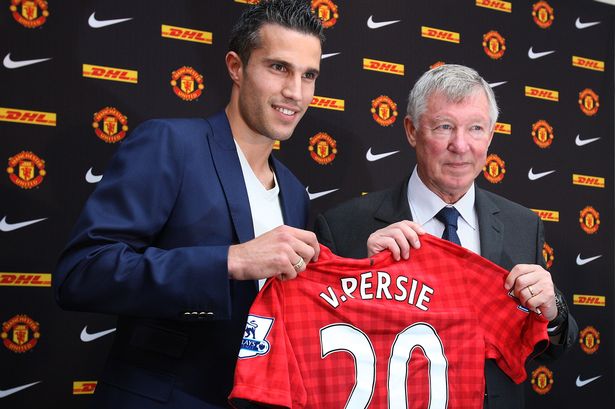
It is hard to forget the unsavoury endings that our best and most recent captains have had with the club: whether it be the aforementioned Fabregas moving to Barcelona in a display of petulance with his World Cup winning Spanish teammates, or, more recently, Pierre-Emerick Aubameyang’s move to Barcelona after being frozen out by Mikel Arteta, or worst of all Robin van Persie’s sweet talking on the phone with Sir Alex Ferguson landing him a move to Manchester United, winning the club their most recent Premier League title back in 2013 and performing emphatically, punishing Arsenal in the process.

Robin van Persie shattered Arsenal hearts with his move to Manchester United, disrespecting the captaincy in the process. Image: 2012 Manchester United FC

Even without transfer drama or disrespect to the club, Arsenal have had an array of captains quite literally unfit for purpose. From 2012 to 2018, club captains Thomas Vermaelen, Mikel Arteta and Per Mertesacker played a total of 4,032 Premier League minutes, for comparison Chelsea captain John Terry played 9,913 Premier League minutes in the same period! In fact, despite often deputising as captain and having a great reputation amongst Arsenal fans, in his only full season as official Arsenal skipper, Laurent Koscielny racked up just 1,330 Premier League minutes, however the Frenchman’s name won’t just be mentioned for a lack of game time…

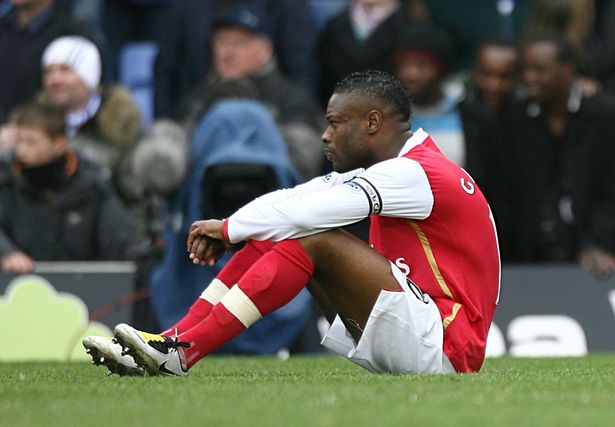
As well as fitness issues and transfer heartbreaks, who can forget the other endings to the Arsenal captaincy in the Emirates era? We’ll start with William Gallas shall we: the man signed from Chelsea and sold to Tottenham, what could go wrong there? Gallas was captain for the entirety of the 2007/08 season, however tensions started to bubble beneath the surface after a collapse at Birmingham City, where he stropped, sulked and eventually sat on the pitch long after the final whistle whilst the rest of his teammates walked off. This event snowballed and after remaining club captain into next season, Gallas gave an interview which proved to be the final nail in the coffin, where he publicly questioned his teammates ability and mentality, giving Arsène Wenger no choice but to strip the Frenchman of the captaincy, leave him out of squad for the next game and fine him two weeks wages. Simple!

Another Frenchman who deserves a small mention here is none other than Laurent Koscielny, a man who played through physical pain plenty of times in the latter stages of his career for the club and received adoration for it. Koscielny swapped Arsenal for Bordeaux after almost a decade and over 250 appearances at the club, no animosity – oh wait he’s taken his Arsenal shirt off and thrown it on to the floor in his announcement on Bordeaux’s official Twitter account… moving on.

William Gallas experienced an eventful time as Arsenal captain, and his emotional nature often made the role seem unserious. Image: PA

Lastly comes Granit Xhaka’s time as Arsenal captain, which was a short and complicated one. I felt and still feel for Xhaka in many ways, but to put it simply, Xhaka was made the main captain in manager Unai Emery’s infamous ‘leadership group’, which was actually made up of five players, although it was always unclear what exactly was going on here. Regardless, Xhaka seemed and still does in many ways seem like a natural fit for a club captain – a strong speaker who is captain of his nation, rarely injured and never afraid to defend his teammates. However, after criticism from Arsenal fans throughout his whole stay at the club to this point, some which crossed the line to abuse, an uninspired Emirates began running out of patience, cheering as Xhaka was substituted against Crystal Palace whilst drawing the game, bringing the Swiss to boiling point, culminating in him gesturing at fans to boo louder and telling them to “F*ck off”. Under pressure boss Emery took an almost immediate decision to strip the captaincy from Xhaka and instead give it to Aubameyang, who only ever received the armband as he was far and away our best player despite never really being suited to the role.

Granit Xhaka reached a point of no return as Arsenal captain after the events which unfolded against Crystal Palace…
Image: DAZN via Le Grove

Alas, here we are today, and since Aubameyang’s departure, Kieran Tierney, Granit Xhaka and former striker Alexandre Lacazette have all shared the armband but now it is time for something more permanent, a moment I have dreaded in recent history – often the beginning of the end for a player at Arsenal.

As we have come to expect during Arteta’s tenure as Arsenal manager, the process of who will be next captain will be decided diligently, and this culture of captains who aren’t fit for the role should be coming to an end soon, in line with the rest of the cultural reset Arteta wants to instil at London Colney.

Rather than pretend that there are no rumours or leaks on who may be awarded the captaincy next, in my opinion the candidates in the current squad are Tierney, Xhaka, Martin Ødegaard and Gabriel Magalhães. Recent reports linking Ukrainian Oleksandr Zinchenko to Arsenal raise my eyebrow, as he seems to be a leader in every sense of the word, although I’d be doubtful that a player would walk straight in and become captain – regardless, like all the other players listed above, armband or not they will provide leadership.

Kieran Tierney has long been a fan favourite to be next captain and is no stranger to wearing the armband, although his inconsistent fitness provides a stumbling block to making this a reality.
Image: @iF2is on Twitter

Looking at those names, it is easy to make a case for all of them, but one name stands out to me completely. There are pros and cons for all, and there are certainly cons with this choice, but I believe the next Arsenal captain will be Martin Ødegaard – and I think this is the right choice.

The initial reaction I read amongst fans when Ødegaard was linked with the captaincy was one of disappointment, a belief that he is a little too much of a luxury player for the role and could struggle when the chips are down – a sentiment I share to a degree. I think what is important though is breaking down exactly what is required from a captain, and for me it would be these qualities:

  • Experience: Either as a captain or in football generally – no situation should fluster them.
  • Communication: This goes without saying – your teammates must understand your commands and be able to access you, so for me your goalkeeper should never be your captain.
  • Availability: As discussed earlier, availability is the best ability especially as a captain, as this creates a bond between you and your teammates, providing clarity and consistency in your leadership while avoiding confusion.
  • Footballing IQ: A captain should be able to lead a press, tell his teammates where to be late in a game, tell his defence to push up a yard – the small details make a big difference.
  • Squad role: A captain doesn’t have to be your best player by any means, but having an important role in the squad helps to ensure consistency – much like availability does.
  • Relishing the responsibility: Captains are required to do far more behind the scenes than fans ever appreciate, countless meetings, being a link between the players and manager or simply listening to your teammates’ issues.

Despite having rough parameters for what I’d like to see, there really is no right or wrong way to captain in the modern game, at least not just put into the cliched ‘vocal leader’ or the ‘leader by example’ boxes. So much more goes on behind the scenes as a captain, even down to the respect a player has in the dressing room. France’s World Cup winning team of 2018 is a great example of this: Hugo Lloris captained the side, yet the man with the powerful speeches gearing his squad up for battle was Paul Pogba, but this did not detract from what Lloris brought to the role. Players aren’t just looking up to one figure in their dressing room anymore – different characters bring different characteristics.

Ødegaard might not be the archetypal leader, but he is certainly the best fit in the squad. The Norwegian was named captain of his country at just 22 years old, and has captained the team in his 18 appearances since then – a squad composed of players of all ages and levels of experience. Norwegian boss Ståle Solbakken praised Ødegaard’s maturity when appointing him captain: “There was a feeling I had after conversations with players. We think Martin has lived a long life already in European football,” Solbakken said, with Ødegaard relishing the opportunity, who responded: “It comes with an extra responsibility both on and off the field. I’m ready to take that.”

With all of this praise from within the game, we must also note the feeling from the fans, and from the outside looking in, Martin Ødegaard appears to be a huge voice in the dressing room and a massive influence on the pitch – such is his role in the team. From my seat at the Emirates last season I watched Ødegaard orchestrate the game with the ball at his feet as much as I did when he was out of possession: constantly scanning, organising his teammates and leading the press. He is capable of changing a game on his own, providing a moment of magic to change a lacklustre performance into a strong one, and to inspire his teammates to improve their performances. This X factor that the Norwegian possesses is something that cannot be taught, and indicates Ødegaard having a strong mind on young shoulders. He pictures the game two steps ahead of the rest, anticipating well and reacting sharply, and above all he really does seem to care, a quality you would expect from any player, but as Arsenal fans will know, does not always transpire from everybody.

Martin Ødegaard has proved a reliable choice for captaincy and has earned the faith of Mikel Arteta, he continues to captain the side in pre-season.
Image: Football London

I certainly have reservations about awarding the captaincy to Ødegaard, concerns that mainly regard mentality and consistency. As joyful a player as Ødegaard is, Arsenal’s #8 has the tendency to drift into a different world when the occasion or atmosphere gets too much. Much like his flair-laden Emirates forefather in Mesut Özil, he is unstoppable in the right flow, but if that flow is interrupted for whatever reason, the result can be catastrophic. Once the mental side of Ødegaard has begun to wobble, the technical side is quick to follow, eliminating his ability to change a game with the ball at his feet, or organise his teammates pressing. A few big examples of this came last season away at Crystal Palace, Tottenham and Newcastle, where the nine points dropped ultimately cost Arteta’s side Champions League football.

Ødegaard was outfought and outthought in Arsenal’s all or nothing game at St. James’ Park in May.
Image: Modular Phone Forum

This leaves me wondering: is that the difference between a good captain and a great captain? Is that enough reason alone for Ødegaard not to receive the armband?

However, the more pertinent questions are: who would be a better fit? Does the armband even matter that much anyway? Could giving Ødegaard the extra responsibility and importance dissolve these concentration issues altogether?

Ultimately all other players mentioned prior to be put forward for the captaincy have glaring issues themselves, from Tierney’s unreliable fitness, to Xhaka’s reluctance to take the armband back full time after previous misdemeanours, or Gabriel’s lack of fluent communication with the team… Or indeed that after summer reinforcements are made, all three of these players may find themselves far more heavily rotated than before.

As for the captains importance in the modern game and more specifically at Arsenal, whilst I think it is important you have some kind of chain of command at a football club, and it clearly is a decision that needs to be carefully considered to provide the required stability, in this Arsenal side, I’m more confident than ever that the official captain will be entering the pitch with ten more around him. The lack of egos and the feeling of every single player and member of staff pulling in the same direction at the club has real significance, and the environment Mikel Arteta and his team have nurtured allows for fans to feel comfort over decisions like this and in moments of adversity. Arsenal last season found a rhythm, and developed into a team who are not only capable of producing great football (albeit still with a way to go), but will not be pushed over or bullied. This type of mentality from top to bottom at the club will prove far more important than the negligible differences between the candidates for captaincy.

Arteta’s team has a bond that has been lacking at Arsenal for many years, this puts far less pressure on the captain acting as a single ‘saviour’…
Image: GLYN KIRK/AFP via Getty Images

With that being said, one decision will have to be made, and you did not read this for me to sit on the fence. I must preface my closing choice with the wildcard that is Granit Xhaka, simply because I feel he should have never had his captaincy stripped in the first place. Whilst I understand Emery’s decision under pressure, as well as Xhaka’s disciplinary issues at times, he is accustomed to the role and acts as a model professional, although I accept avoiding an official return to captaincy for Xhaka is the smart decision. My choice, despite his major flaw, remains Martin Ødegaard, as one thing that is certain is that he ticks all the positive boxes, is vitally always in the starting XI, and therefore acts as an anchor for the rest of the players to work around. He is used to the responsibility of being a captain and is very clearly one of Mikel Arteta’s most trusted players. With an atmosphere and unity so strong at the club, the decision becomes more a case of who ‘makes the most sense’, and the answer is Martin Ødegaard, who I’m excited to see blossom into the role if he is trusted with the responsibility.