
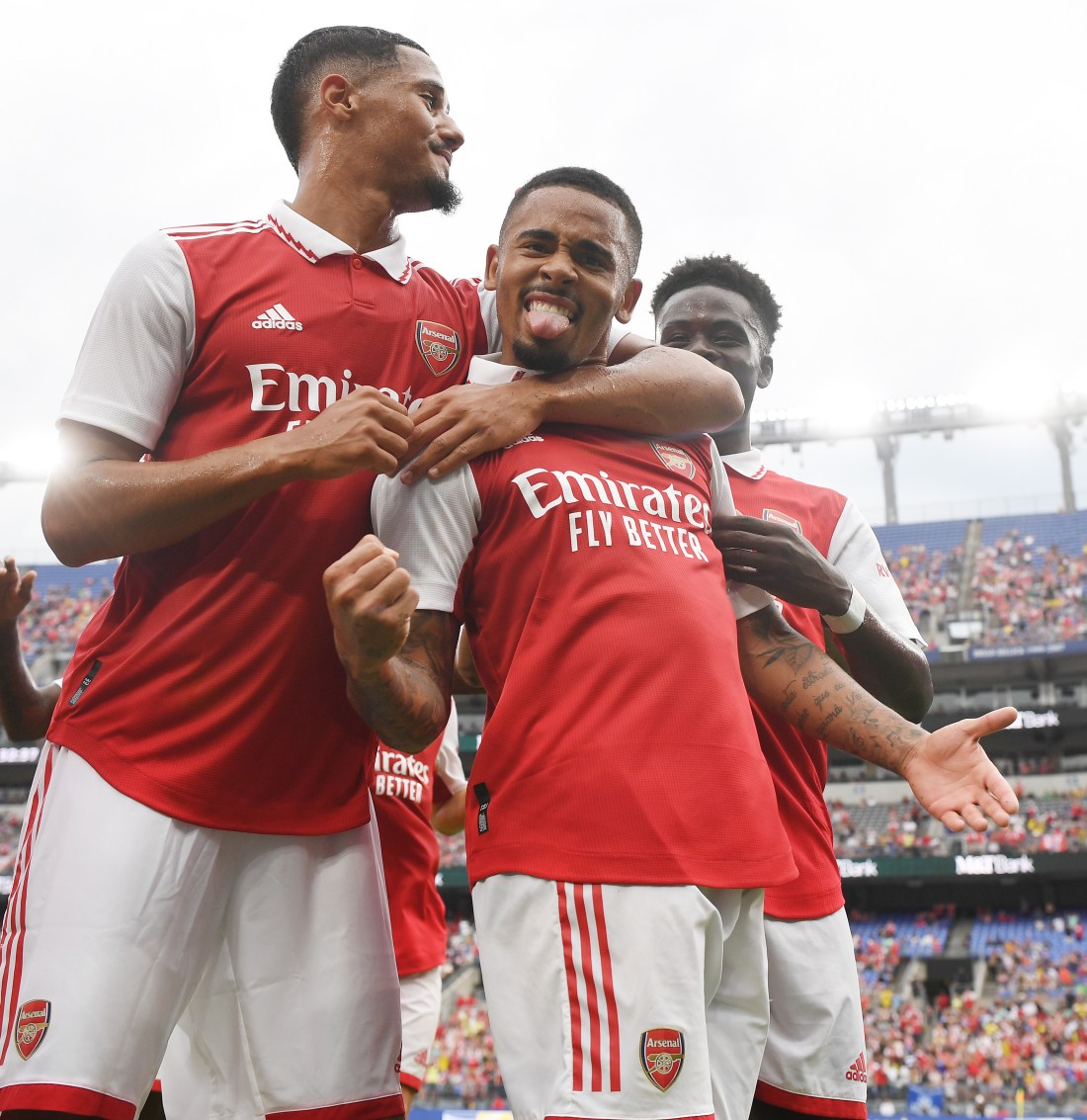
Can you feel that?
The fresh feeling of a new season is here, the air is filled with optimism, the latest kits have been released, the predicted lineups are doing the rounds, and you are currently really puzzled as to where your team is actually going to drop a single point this season – the team is practically perfect in every conceivable way!
Arsenal are launching their 2022/23 season with a trip to Selhurst Park, a ground which has not been kind to the Gunners in recent history, and with banana skin potential Arsenal will have to be careful. Though it is not all doom and gloom, because despite my warning that playing a competitive game will bring us all back down to earth, especially against Crystal Palace (I have personally prepared myself for a Jordan Ayew masterclass), I have a strong feeling that Arsenal can build on the already positive foundations that were laid last season. I will preface before expanding that at the point of writing Arsenal’s last first team signing was Oleksandr Zinchenko and we have so far avoided any doomsday scenarios that mirror the opening day of last season against Brentford, where our squad was obliterated with COVID-19 cases, long before postponements were made the norm for this issue.

(Photo: Rights belong to me)
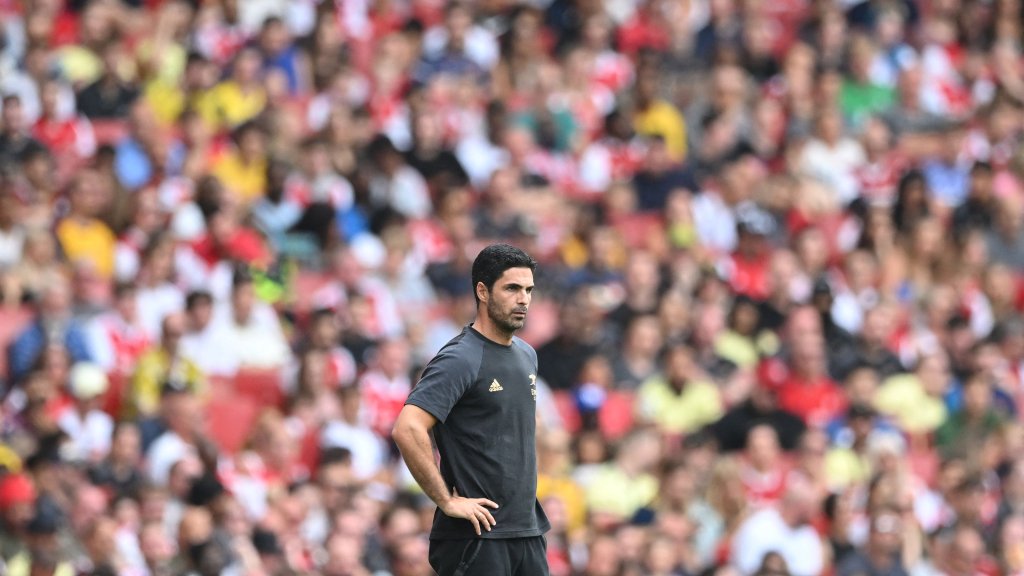
Alas, I won’t discuss the seasons opener in much more detail, I just make the point because I believe that how you start is key, and whilst Mikel Arteta is a man of strong character who can (and has) demonstrated his ability to rescue more precarious positions, Arsenal have a “nice” early fixture list in modern Premier League terms, so a strong start in those five would boost confidence immeasurably amongst the group. With that being said, lets take a look at the bigger picture of the season, before a ball has been kicked…
What should we be aiming to achieve this season?
I will start with what I believe is a far better way of assessing the confidence of fans in their team than predicting a league position, predicting a points tally. I am forecasting everything in this article on the grounds that we avoid an injury catastrophe which sees multiple key players out for extended periods and have to mention that Arsenal are yet to address two last key gaps within the squad, those being an established winger signing (à la Raphinha) and an extra midfielder, someone in the Youri Tielemans bracket, not strictly his profile, although an extra midfielder is urgently required as we will explore.
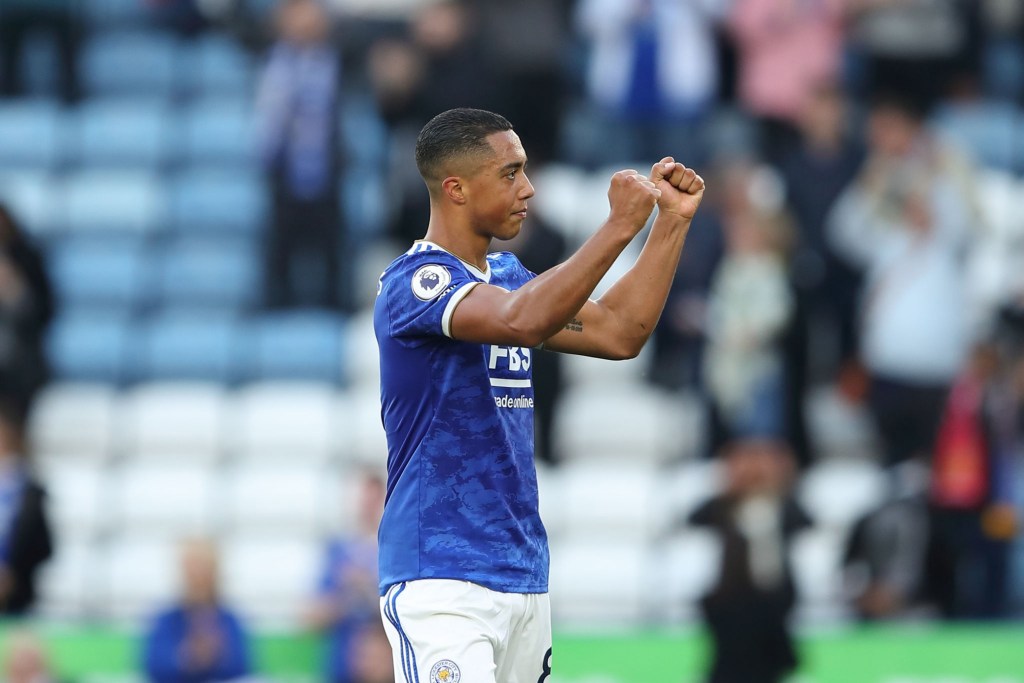
I believe a realistic, positive target for this side would be 75 points, which would confirm a place in the top four in the last five seasons, leading to a finish as high as second in the 2020/21 season. The last time Arsenal achieved 75 points in the league was back in 2016/17, ironically the last time 75 points was not enough for a top four finish, testament to the competitiveness of the league on that occasion. The magic 75 points I believe we could achieve would give us a huge chance of securing Champions League football, and would require just two more wins from the previous campaign. In practice, I believe this team is well equipped to reach this goal, however I have not set the bar at over 75 points to account for the reintroduction of European football into our calendar, which will certainly provide a challenge in comparison to last year, for the players and manager alike. As well as this, the lacklustre attempts at silverware in the domestic cups last season did wonders for our recovery periods between games, and with a never seen before mid season World Cup, there are bound to be new challenges along the way.
But, with new challenges come new beginnings, and there are four key new additions to the squad who are ready to play a vital role in the upcoming season. Arsenal have strengthened in the form of Gabriel Jesus (£45M), Fabio Vieira (£34M), Oleksandr Zinchenko (£32M) and William Saliba (recalled from loan). With these four players comes a blend of young talent, hunger, leadership, experience, technical brilliance, versatility, and an additional sense of competition amongst the squad. In regards to the 75 points I implore Arsenal to achieve this is incredibly important, as I actually feel as though much like the 2016/17 season, the 2022/23 season is going to be incredibly gruelling, competitive and difficult to navigate. The Premier League schedule looks hectic as it is, without factoring the scheduling of two domestic cups, all UEFA competition’s and the small matter of a World Cup in-between.
Regardless, I believe a 75 point Premier League campaign, at least one final in a domestic cup or the Europa League and a respectable run in the remaining two competitions should be required by this stage in Mikel Arteta’s tenure. I am not one for setting strict goals in football as a fan, as there are so many variables that can dictate and transform your season in an instant, but having rough goals ahead of a campaign is good for assessing progress, and Arsenal are good enough for these targets from a pure footballing point of view. In addition, much like last season where the Arsenal fanbase had a massive, positive change in expectation due to how we performed, it is important to reassess as the games come and the weeks go by, this helps to keep the pressure up to perform.
(Photo: @Arsenal on Twitter)
Arsenal, Arteta, and the Champions League…
Discussion about Arsenal’s requirement for Champions League football belongs in the “this is Manchester United we are talking about here” hall of overused punditry lines with no real substance or thought these days. Regardless of the truth behind the statement from an expectational viewpoint by fans, a way to attract the very best players to the club, or from a financial standpoint due to the significance the top four spots in the Premier League hold on the clubs which finish there, we have heard it far too often.
The issue is that Arsenal had begun to fall behind as early as 2016, and whilst participating in Europe’s elite competition has always been desirable, the astonishing value that TV contracts and performance related bonuses hold combined with the financial suffering of the last few years throughout European football largely due to the COVID-19 pandemic (speaking of topics everyone has discussed far too much), a growing disparity has formed between clubs that are consistently qualifying for the Champions League and those who are not. This means that whilst Arsenal have certainly taken large strides in the correct direction, demonstrating a positive trajectory, the club will always slightly suffer until it sees the back of its Thursday night European adventures.

(Photo: BT Sport)
Mikel Arteta has done a great job as Arsenal manager when you also consider this is his first job in the role, but football is a results business and whilst he has dealt with some unprecedented challenges, Arsenal cannot drift as we have done for nearly half a decade for much longer. A balance needs to be struck. Yes, Arteta has failed to achieve the top four so far in his job here, however these failings have been the matter of just eight combined points in his two full seasons, and when you consider the rest of the work that has been done at the club in building a strong connection back to the fanbase, using the transfer window positively to sign players who are improving the squad each time, culturally resetting the club back to where it should be, helping to regain an identity, or simply starting to clear that rot dating back to 2016, I feel there should still be a positive outlook when wondering what the future will hold.
Arsenal got worse before they got better under Arteta, and the cynic in me may even question whether it is possible that my expectations grew lower, meaning I appreciate what I used to have far more, but amongst those thoughts it’s hard to ignore the tangible difference in mood around the fans, players and club. Maybe it is time to abandon the terminology that was largely adopted by Arsenal fans late into Arséne Wenger’s reign, of always being either a managers biggest fan, or their number one enemy, with both of these extremes often lacking the correct nuances to correctly judge a managers tenure.
This season I hope that Arsenal’s emphasis as a club, whether from fans or players is not about getting top four specifically, but about achieving their absolute best level of performance. Whilst this may seem dismissive of the goal of top four that we have not yet achieved, I feel that from a footballing perspective Arsenal are more than good enough for the Champions League, however the energy, hope, and expectation of top four at the end of last season ended in capitulation. There appears to be a mental block that gives some fans and players alike cold feet at the prospect of getting the job done, which is why I am so pleased at the calibre of player that we have signed thus far, as all four new faces achieved Champions League qualification with their sides last season.
Lastly, the new rules by UEFA that will come into effect from the 2023-24 season that drastically change the Champions League and the way teams earn their spot mean that this is the last season where the traditional top four battle will truly exist, and it would be a good statement to send if we could achieve qualification via the old format one last time. The new system has four new spots for clubs that would be left out in the current circumstances, with two of these spots allocated to clubs with the highest coefficients who were due to partake in the other UEFA competitions, slots which firmly suit Arsenal’s recent criteria as a club, as the Gunners are currently ranked 17th in the UEFA coefficient, thanks to almost three decades of European football without interruption, and some deep runs in tournaments since we began regularly appearing in the Europa League. Of the sixteen teams above us, only one team would really strike me as a non-guarantee for automatic Champions League qualification each year.
The squad…
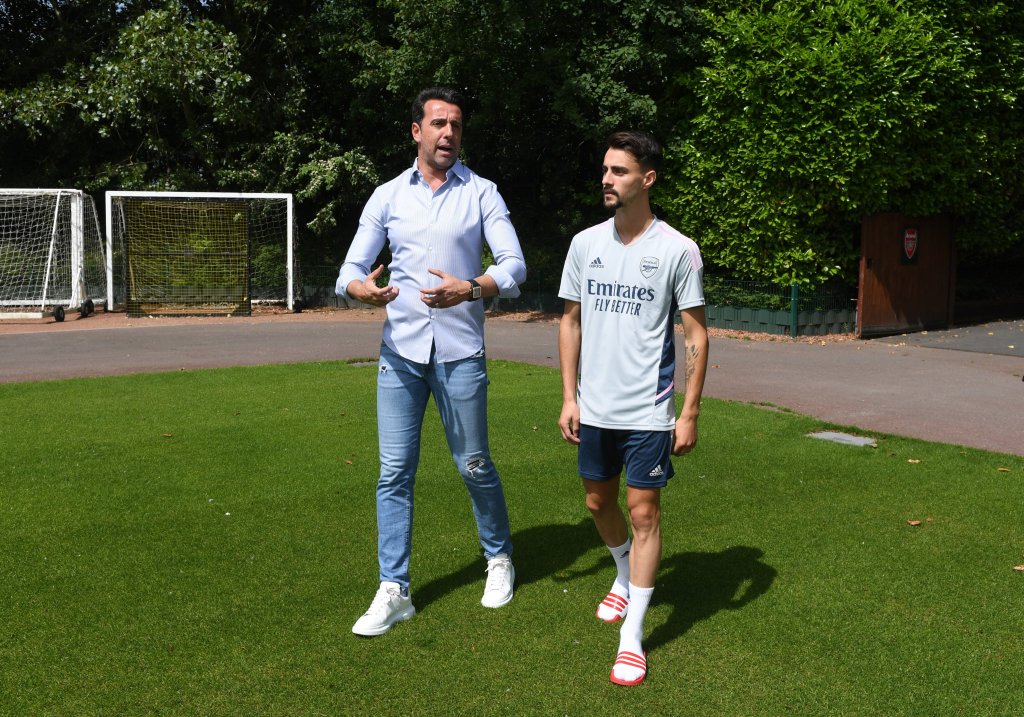
It remains to be seen whether Arteta will continue with his 4-3-3 system, it looks likely to me in which case an uninjured side is vital, as this requires our specific role players to be available. Fabio Vieira’s signing strikes me as a real statement that we will continue in this way, he also suggests a stylistic preference from Arteta that may have come from his tuition by Pep Guardiola and Arséne Wenger, to pack plenty of technically strong, capable players onto the pitch at any given time, whilst in typical Arteta fashion not risking too much and becoming defensively vulnerable. Vieira is a wildcard, I had heard of him and seen him play briefly but with his transfer appearing from thin air, I have not really even processed it yet, he is certainly a player I am intrigued by, to unlock defences, strike the ball well from range, dribble effortlessly and evade opponents, he looks to be a real steal with sky high potential, adding another tool to pick the lock of the opposing defence.
(Photo: @Arsenal on Twitter)
By far my favourite signing is that of Gabriel Jesus, the player I have been trying to figure out ever since he stepped foot on English soil back in January 2017. At first he looked a poacher with great footwork, but after more time spent watching him I saw a character, who works tirelessly without the ball and always has the cogs in his brain turning when he possesses it. Jesus started to strike me as a player who needed more, he was hungry but he always had to share his food with Sergio Aguero, and later to Guardiola’s systems which had little to no room for him. In the 2019/20 season is where I began to see a player who was capable of far much more than I ever thought. A forward trusted and capable of playing in any game, as well as being able to contribute in any position in a front three.
Jesus dropped some special performances during this time, against Real Madrid in both legs of a Champions League tie for example. Once again a couple of years later, Pep rolled the dice and made Jesus his main man, where he was stunning whenever he was given the chance, scoring what felt like a goal per game with confidence flowing. Jesus’s ability to rise for the big occasion and be integral in big games, paired with his pre-season so far has shown me that I think he simply needed more responsibility, a responsibility he will be awarded with at Arsenal. Be excited, Jesus is going to raise the level of our football in every conceivable way, and without disrespecting Alexandre Lacazette, the fact that we have moved on from him naturally was bound to improve us, his immobile, physically weak, non shot creating style robbed us of many moments where we could have scored last season – I don’t see these same opportunities being squandered now!

(Photo: @iF2is on Twitter)
Zinchenko’s addition to the squad and the profile it brings has been long overdue. Arsenal’s fullback pairing of Takehiro Tomiyasu and Kieran Tierney are top quality players who’s dynamics combine to form a great partnership, the issue has been the pairs infrequent availability due to injuries. Zinchenko provides a world class option at LB, as well as in many roles through midfield. The Ukrainian is another player to increase the technical level of the squad, and his intelligence, experience and leadership at just 25 is almost unheard of. Zinchenko offers an overlapping option if needs be (to compliment Tomiyasu) or the ability to tuck in to midfield or even CB in a build up, allowing a RB in the profile of Cedric the license to get forward.
Arsenal’s fullback situation impacts the back four massively and the way that the team build up. However, with the returning William Saliba to the fold and ready to be a key player in Arteta’s set up, the defence should be far less stretched than last season. Saliba is in my eyes, the perfect modern CB. He has worked incredibly hard since his arrival at Arsenal, with two loans to separate French clubs, where he has proved his abilities time and time again. The Frenchman boasts a 6’3″ frame, a brilliant ability to tackle cleanly in any situation, a strong reading of the game, as well as an excellent prowess when in possession. He is commanding, and his arrival compliments both Gabriel and Ben White, who will be competing with him for the two CB spots, which will push all three players to be at their best. Linking this to the fullbacks, in pre-season so far Ben White has played RB on a few occasions, with a Gabriel – Saliba CB partnership forming, this has been effective and is certainly an option to explore in the event of injury. With that being said though I personally do not see value in extracting too much from pre-season games, where players are travel tired, not at 100% fitness, in an uncompetitive atmosphere and managers are trying new things without fear of being berated heavily.
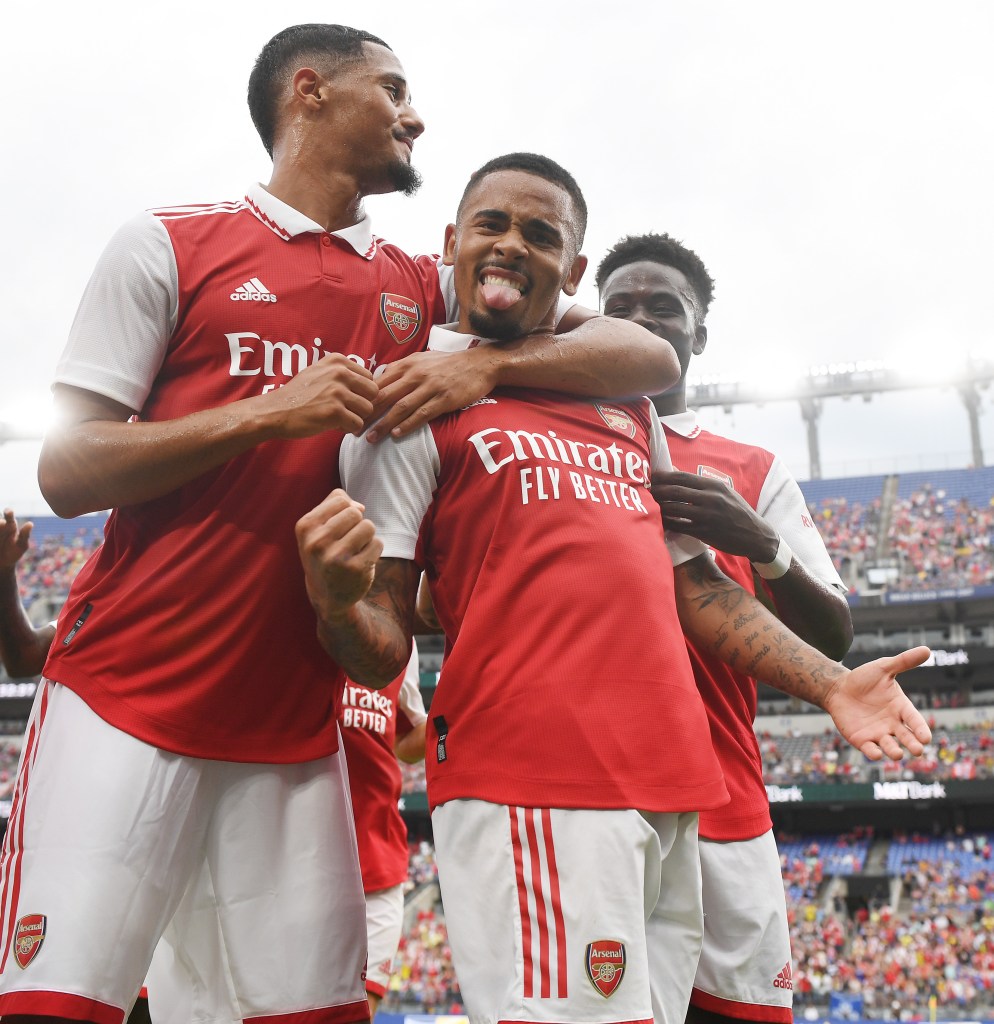
One last player I’d like to put the spotlight on is Eddie Nketiah, who has become the latest Arsenal player to don the #14 shirt following his contract renewal. I could not be happier for Eddie, he is a player I have seen vastly develop since Arteta’s appointment, and has been on a positive trajectory ever since. Nketiah returned from an efficient yet ultimately useless loan spell at Leeds in the January of 2020, where he played minutes off the bench much as he did at Arsenal prior. At this point Nketiah was a poacher who displayed good movement, a ‘knack’ for scoring goals at all levels and an average level physically, meaning when faced against the right CB he could hold the ball up well and score headers too. Since then, due to his hard work and the work of the club, we have a faster, stronger, much more technically accomplished, better dribbler of the ball who can play as a forward across the front three, interchanging based on the situation in the game. Nketiah is brilliant in tight spaces and his dribbling is some of the best you will see from a young English CF these days. Pairing this with the raw abilities as a CF he possessed in the first place and the fact that the type of goals he scores has increased, and we have a real player on our hands, someone I have been playing close attention too and who I feel will have a bigger impact on this team than most people have realised yet.
(Photo: @Arsenal on Twitter)
All of the players I have mentioned along with the already confirmed brilliance of the likes of Bukayo Saka lead me to believe we will be far stronger from a structural standpoint, which is key in a 4-3-3 when in defensive transition, a far stronger pressing team due to the replacement of Lacazette with the dynamism and work-rate of Jesus, Nketiah, Martinelli, Saka and Ødegaard combining and better defensively due to the bolstering of the squad in this area, along with the return of William Saliba.
The (winter) World Cup and the importance of squad depth…
Addressing a World Cup which will begin in late November and come to a close a week before Christmas is a feeling that is alien to me, so let’s explore it together. The tournament has already had an impact on the 2022/23 season, with the campaign starting earlier than it would in normal circumstances, as well as the fact that more matches will be played over a shorter period of time, with two games a week the norm at times for sides who are not even in Europe. The Europa League group stages will be played with infrequent breaks between match-weeks, and these will conclude almost a month earlier than normal, on the 3rd November. The last Premier League matchweek will commence on the 12th November, and players attending the World Cup will join up with their national teams shortly after.
The issue I see with this structure is that football has been catching up with itself since the COVID-19 pandemic, as since then, we have seen no substantial breaks for top players who have competed in all competitions as well as playing in the Euros, AFCON or Copa America tournaments that have followed. Simple science will tell us that with less recovery comes an increased chance of injury, so Arsenal will have to manage their players to a microscopic degree and not take any risks. As for the World Cup itself, we will then be separating players who are competing and those who are not, which leads to many interesting scenarios.

(Photo: @iF2is on Twitter)
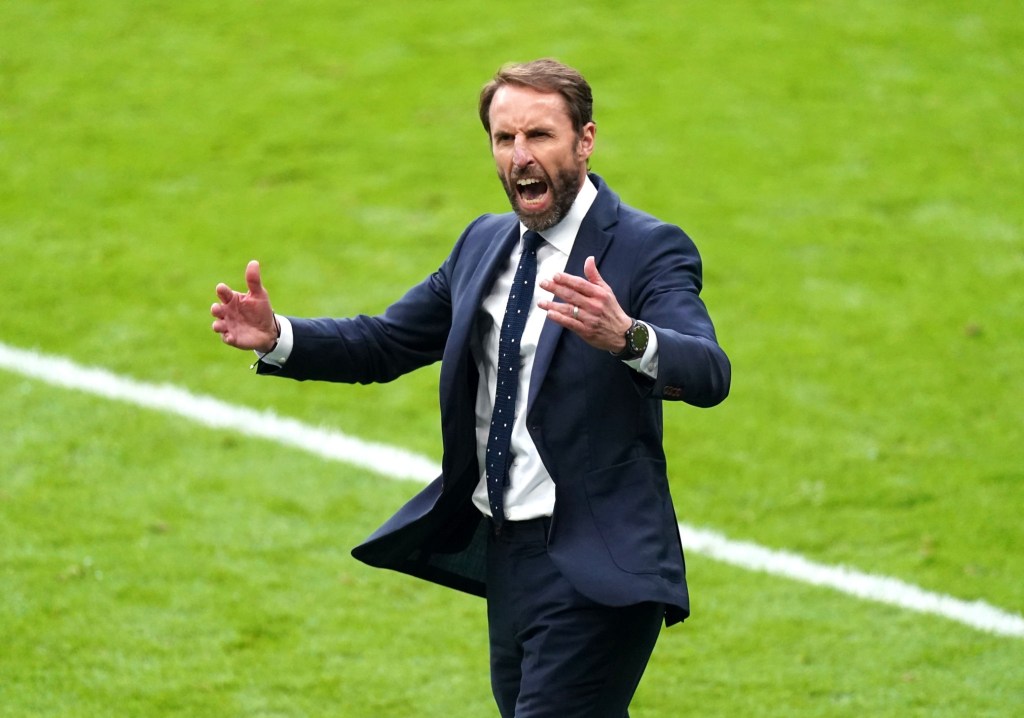
Let’s use Martin Ødegaard and Bukayo Saka as examples here. The pair are key first team players for Arsenal who will always play when fit for both club and country, both attackers, and both under 24 years old. Ødegaard’s Norway did not qualify for the tournament meanwhile Saka will be travelling to Qatar with England. Despite their similar circumstances, the player going to the World Cup in any case is going to travel far more, as well as training and playing at a far higher intensity whilst the tournament takes place. Bringing form into the argument, if both are in great form, one will have their form massively interrupted by the month in which they will not be playing, whilst the other may translate their good form to their national team, but face burning out upon their return, as typically there would be a bigger gap before and after the tournament. Regardless of the reason, this break will damage their form and therefore be a negative for the club. On the flip side of that, a break or potential change of scenery could help bring some players alive, so we just need to hope for some balance – however this and so many other factors which we may not have even begun to think about will massively determine how each club performs, and with so many variables out of the clubs hands, it is going to be difficult.
(Photo: @iF2is on Twitter)
The work Arsenal have done to make this squad more rounded with quality and adaptability has gone some way to easing the pressure of the unknown consequences of the World Cup though, with squad unity at a high and players not only able, but willing to play multiple positions, Arsenal are in a fairly strong position. I believe squad depth and availability really could trump outright ability this year within the Premier League. The post World Cup run in to the end of the season with multiple games per week in different competitions is going to require a strong core, which I believe Arsenal now possess. The fact that Arsenal are not overly reliant on one player is also a benefit, I would never hope for an injury to any player, but a spell on the sidelines to the likes of Harry Kane at Spurs or Kevin De Bruyne at City could completely derail a season in an instant.
One thing I can be sure of in this World Cup: there will be plenty of unhappy club managers making phone calls to national team staff, asking for an extra massage for their player!
Our competition…
Now that we have looked internally and projected the clubs fortunes from the inside, how do our main competitors shape up ahead of next season? I believe Manchester City and Liverpool have both become slightly weaker due to the players they have allowed to leave, however Klopp and Guardiola’s teams have left an almost 20 point gap between themselves and the rest of the league on numerous occasions in the last few seasons, and I cannot see anybody making up that gap just yet, despite the fact it may be a closer fought affair.

(Photo: Getty Images)
Chelsea and Tottenham made up the final two spots in last season’s top four, and have both since had busy transfer windows. Despite the clubs finishing in third and fourth respectively, I believe it is Spurs who are a much larger threat to Arsenal and the rest of the league than Chelsea, who look stagnant at the minute. Spurs pipped Arsenal to fourth within the last week of the season, mainly due to an Arsenal capitulation, however I believe that had Antonio Conte been in charge for the entirety of last season, the tight race would have commenced between Arsenal and Chelsea instead. Conte is nothing short of a world class coach, and whilst his approach may be critiqued as more of a short term plan, it is undeniably effective. Spurs looked sensational at times, with Heung-Min Son and Kane being joined in attack by young Swede Dejan Kulusevski from January, forming a frightening attacking trio. Adding to this the ability for Conte’s system to cover up for poorer players weaknesses (Ben Davies), and massively improve underperforming players (Emerson) and Spurs have all of the ingredients of a team who can put a strong league campaign together. The additions of Ivan Perišić and Yves Bissouma stand out to me in particular, adding proven quality in positions that are vital in the system. The signing of young Djed Spence, one of the finest wing-backs in England last season, is also an exciting proposition.
Chelsea on the other hand, had quite the opposite season to Spurs. After a strong start where the Blues were touted as title contenders they slowly began to fall away, with their marquee summer signing Romelu Lukaku not hiding his frustration at his role in the team, eventually making his intention clear to leave the club. Chelsea had a disappointing 2022, with average Premier League form that saw them trudge to an uneventful third place finish, as well as two domestic finals that were both lost on penalty shootouts to Liverpool. Off the pitch the club found themselves in a huge area of discomfort, with former Russian owner Roman Abramovich having his assets frozen in the midst of a political battle between the UK government and major Russian money, as a result of the Russian – Ukrainian war. The club were threatened with the prospect of sanctions, but have since had a takeover, with American businessman Todd Boehly taking the reins as owner. Since then the club have seen a campaign of new spending, with Raheem Sterling and Kalidou Koulibaly being amongst the big names brought to the club.

(Photo: @ChelseaFC on Twitter)
Despite this, the issues continue for the West London outfit, as two of their first choice targets in Jules Kounde and Raphinha opted for a move to Barcelona, despite Chelsea offering substantial transfer fees and contracts. It goes without saying that this may happen at times in the transfer market, however Chelsea have never had to face this sort of rejection before, especially when participating in the Champions League. Chelsea lack a real edge in attack, Lukaku has returned to Inter Milan and the £100M that was spent on him just a year ago has proved to be a waste. The club are without strong depth at wing-back, and despite a promotion of youth in Conor Gallagher following his positive loan spell at Crystal Palace under Patrick Vieira’s tuition last season, the midfield is lacking in comparison to other top clubs. Adding to this a 4-0 defeat at the hands of Arsenal in America during their pre-season tour, and I do feel confident that Chelsea are the side to pick off from the top four next season.
As for Manchester United, I already see an improvement in the fundamentals at the club under new manager Erik ten Hag, however his project much like Arteta’s will take time to bear fruit at Old Trafford. Fans and pundits alike will have to drop the “this is Manchester United” trope and come to terms that the club has been rotten, and spending your problems away has not, and will not work for them. United are competing in the Europa League and with this have two routes back to Champions League football, however I feel it may be a stretch for them this season. I expect a major improvement over last years embarrassment, but I cannot see them finishing in the top four just yet. The club also have the matter of Cristiano Ronaldo to deal with, as he is seemingly reluctant to drop down to the Europa League (ironic, I know) with the club and is looking for a route out, disturbing what has otherwise been a peaceful and positive start for ten Hag’s team.

(Photo: @ManUtd on Twitter)
As for any other major threats to our season, I would say that the West Ham, Newcastle, Crystal Palace and Brighton bracket of teams, whilst strong, will not have the firepower to trouble the traditional top six this season. The Europa League may surprise some Arsenal fans in its quality after a season out, as it still has a reputation of being “easy” despite some top teams playing from the knockout rounds each season. There is an added importance on topping our Europa League group this season too, as this team automatically qualifies for the round of 16, skipping the round of 32 in the new format.
Final thoughts…
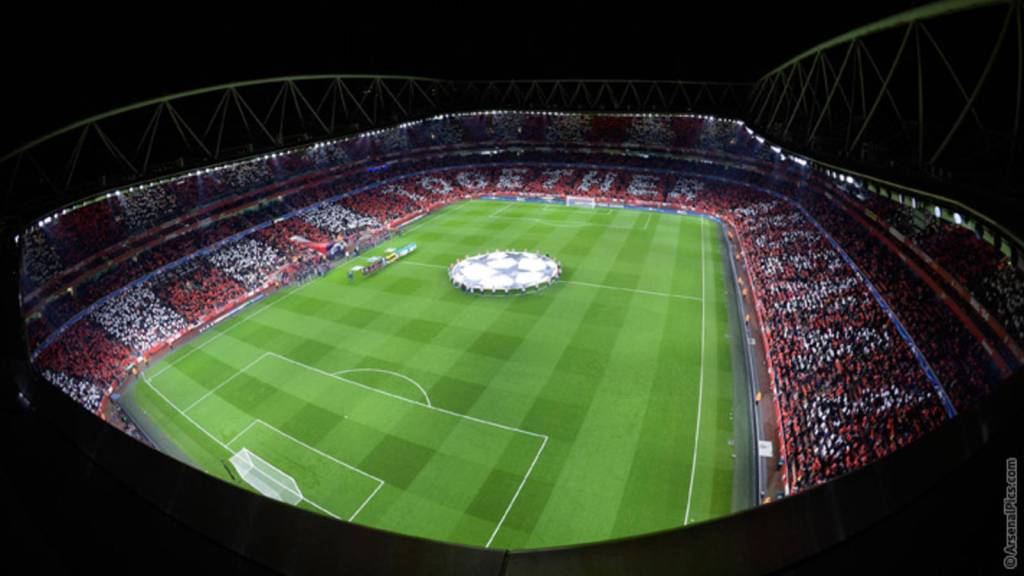
I believe that Arsenal fans should be excited for the season ahead, after a positive season last year, where our style of football was beginning to come to the fore, the fans, players and manager built a special connection with a tangible energy back in the ground, and a top transfer window this summer. Arsenal have once again identified what they need and got it, rather than just signing players who look good in isolation. The vast improvements in some areas, such as the introduction of Jesus over Lacazette, will raise the ceiling of this team immeasurably, and the unity in the squad is an ever-growing plus.
(Photo: Arsenal Website)
I don’t believe in a black or white target in football, nor for a manager, but it is evident that Arsenal at this stage are good enough for the Champions League, and with that they must be participating by the 2023/24 season. I believe anything else would be a failure, simply because I believe in how good this manager and his team are. Arsenal need to make this season about being the best they possibly can be, and if they fulfil that goal, there is no doubt in my mind that we will impress ourselves and others once again, and return to the Champions League, where we can continue to build and progress. Our trajectory has been positive for a while now, and with the rational decisions being made by the club, there is no reason for this to be interrupted. I am very excited for this season, and I think you should be too!
 Joe Writes Football