
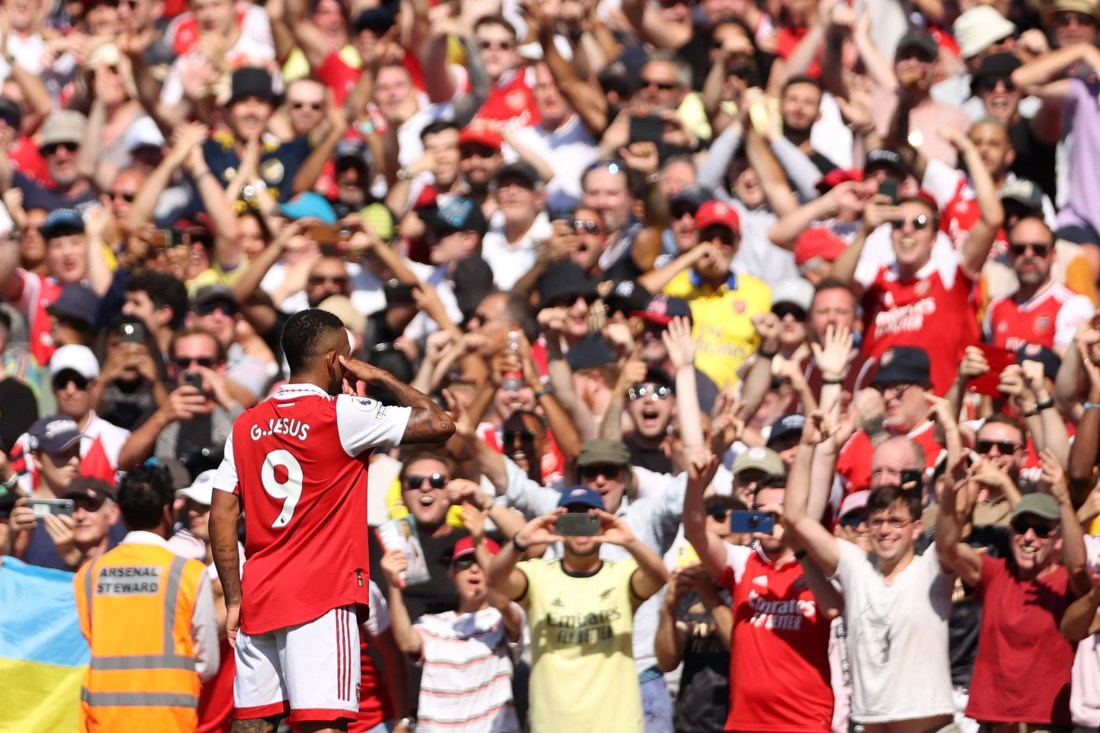
Two Premier League games in to the 2022/23 season have seen Arsenal collect six points, score six goals, and concede two. The Gunners are flying and have maintained their stunning pre-season form early into the new campaign, with the football on show matching the results. In years gone by, it may have been easy to simply praise the fixture list for giving Mikel Arteta’s side an ‘easy’ start, but with the performances as comprehensive and dominant as we have seen thus far, I feel that does Arsenal a disservice.
Let’s take a look back at how we won our first two games, the standout performers, some key moments within them, the way Arteta has deployed his team, and where we can continue to improve, before previewing Saturday evenings visit to The Vitality Stadium, where we will take on Scott Parker’s Bournemouth.
The team:
A factor in our strong start has been the consistency in team selection by Arteta, with the lineup remaining unchanged since Oleksandr Zinchenko signed for the club. The current first XI boasts a strong record of four wins, and a 16-2 aggregate score in the four games it has played (including pre-season).
The side is playing with full confidence, and you can see the on-pitch connection and relationships improving with every kick of a ball amongst the group. The idea in this 4-3-3 system is to play a fluid 3-2-5 / 2-3-5 with the ball, that is if you want to try and give it some sort of structure.
Arsenal:

Made by chosen11.com
This can change depending on the fullback pairing, but in the Zinchenko / Ben White dynamic I’d be confident in my description. The nature of the RB profiles at Arsenal means that whilst first choice Takehiro Tomiyasu and deputising CB White can both provide an overlap and attacking support to an adequate standard, neither are final third threats or presences in the mould of Reece James or Trent Alexander-Arnold. This means the Gunners have a three back hybrid available, suiting the strong defensive capabilities of the pair to stifle opposition attacks.
Our LB profiles are the antithesis of this, with Kieran Tierney and Zinchenko boasting a strong presence going forward. Whilst both are able defenders, Tierney is a powerful runner who overlaps and delivers well from wide areas, whilst Zinchenko is a technically brilliant footballer, who can overlap as well as find himself in the pockets of space left by our LCM, the Ukrainian is known to play in midfield, and this versatility is highlighted and celebrated in Arsenal’s current system.
The single pivot player in the side is Thomas Partey, who is tasked with cutting out the ball, winning duels and distributing to those ahead of him, assisted by his defence who are adept at reading the game to squeeze the oppositions forward line and intercept high. Granit Xhaka has been reinvented as a box-to-box player within this side, with the Swiss finding himself popping up in all sorts of positions across the left hand side, as well as arriving late in attacking areas as an extra body. Pushed slightly higher is club captain Martin Ødegaard, who is a link between the less creative players in deeper roles and the attacking trio, tasked with making things happen on the ball, and supporting Bukayo Saka from his role on the touchline, making underlapping runs to drag defenders away from the winger. The pair also have a really strong combination pattern made possible by their understanding of each others games, and ability in tight spaces.
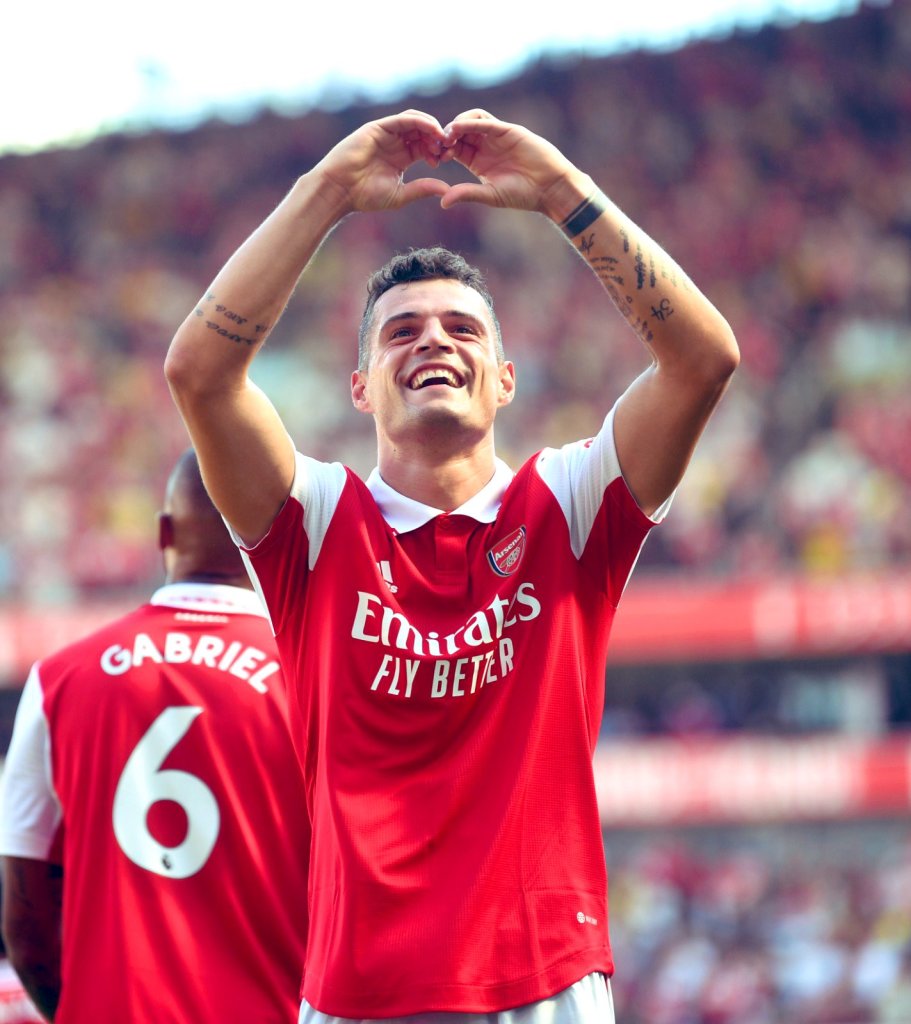
Photo / @Arsenal via Twitter
Then come the two biggest goal threats of the system via the in-form Gabriel Jesus and Gabriel Martinelli. Both have scored two goals so far this season, and provide an electricity to the game when they have the ball. The LW in this system has plenty of space to operate in and is often more isolated with just one opposing defender, such is the support provided by those closest to him. For Martinelli, this means he has time to make runs into space off the ball, in dangerous zones between opposing RB and RCB for example, or he can use his strong dribbling and 1V1 ability to take his man on. The combinations on the left hand side are plentiful, and Gabriel Jesus has found himself operating in this space at times during the opening two fixtures, providing lots of options for his teammates and confusion for defenders, who find it hard to pick him up.
Jesus in the CF role has taken the team to a different level thus far, and represents the biggest difference between the team from last season and this term. Jesus highlights what Arsenal had been missing for so long, with the ball he links up perfectly with his supporting cast, dribbles and carries the ball exceptionally at a frightening pace, crafting goalscoring opportunities frequently, and creating space effortlessly. Without the ball the Brazilian is a bundle of energy, an irrepressible threat to his opposing CB partnership, battling with them all game. He demonstrates strength to hold his man off, ridiculous pressing capabilities, and the physical presence in the air or with opponents who are in possession, pestering and fighting until the opportunity is gone. He cannot be praised enough for his start in my eyes, he makes something happen out of everything in a match, big or small, pretty or not, and it is elevating us hugely.

Photo / @Arsenal via Twitter
In typical Mikel Arteta fashion the team without the ball can drop into a compact 4-4-2, with Ødegaard acting as the second man alongside CF Jesus in the central zones, defending from the front and pressing tirelessly. However, in the opening two games of the season we have seen this far less from the Gunners, possibly due to the opposition we have faced, or simply because we have evolved past the need to have to soak up pressure as much as we used to under Arteta. Palace had us pinned for part of our Premier League opener at Selhurst Park, however the team still attempted more of a high press in the game, not just purposefully sitting back and letting wave after wave of pressure arrive unchallenged. Against Leicester, the Foxes took a more reserved approach to the game, leading to no long spells out of possession, meaning the high press was mainly deployed to win possession back, and with the ball Arsenal displayed far more control.
The positives from our first two tests…
Starting with the positives, and I feel context is a largely important factor in my appraisal and disapproval of certain aspects of the performances against Crystal Palace and Leicester. Arsenal did not play their best game ever against Patrick Vieira’s side, however the opening 30 minutes was certainly one to behold, as Arsenal showed superiority in every aspect of the pitch, from winning duels and second balls, to playing with freedom and a creative flair which silenced the home crowd and laid the foundation for victory.
A set-piece routine provided the opening goal, scored by Martinelli to show the continuation of a theme from last season of Nicolas Jover’s genius. Out of position White marshalled Wilfried Zaha expertly from RB, giving the tricky winger a night to forget, and William Saliba greeted the Premier League with a dominant display, not putting a foot wrong all evening, breeding confidence. Outside of this I feel the well praised Xhaka and Jesus deserve their flowers once again, for playing with such a high intensity and desire to win. Eddie Nketiah also had a great cameo when welcomed onto the pitch from the bench, providing the thrust for the second goal, which killed the game.
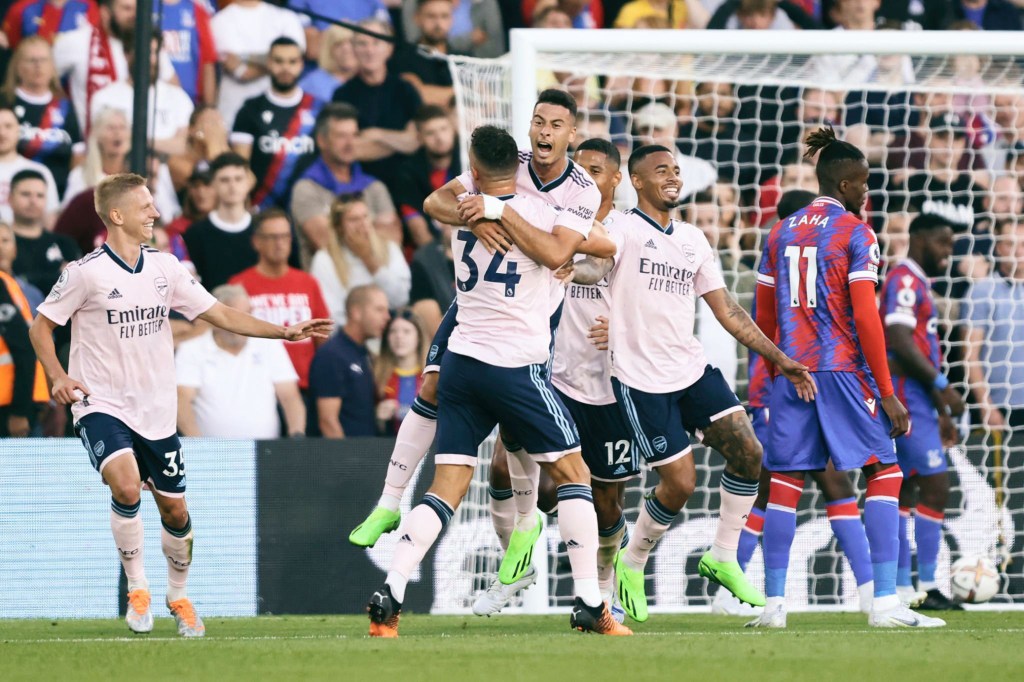
Photo / @iF2is via Twitter
As for Leicester, the Emirates was rocking for this thrilling Arsenal team, and they were not left disappointed. Arteta’s side had some brilliant individual performances once again, in the form of the aforementioned Jesus and Xhaka, who repeated a display of individual drive and skill, this time along with Martinelli, who’s second half goal was sublime, after he had caused havoc to Wesley Fofana and Timothy Castagne on the Leicester right hand side, almost getting the former sent off.
However, it was the team performance that had improved massively from the season opener, with a much improved display of calmness on the ball and control to dictate the game at our desired pace, admittedly aided by Leicester’s pathetic attempts to press or win the ball, with Brendan Rodgers’ side opting to sit off and wait for counter-attacking opportunities instead. The performance was far more convincing despite the winning margin remaining the same, and as a unit the team nullified Leicester’s biggest individual threats for the most part in Jamie Vardy, James Maddison, and Youri Tielemans, remaining patient when building up, not biting at the repeated cynical fouls committed by Leicester, and keeping our heads when the deficit was halved twice in the game – overall the performance was commendably mature and displayed the qualities required to reach the top 4.
The weak points…
Onto the criticism for the performances, starting with Palace, and I would almost describe the teams performance from a structural point of view as the exact opposite to what I just described as the positives from Leicester. The team as a whole showed a considerable lack of composure, particularly in midfield, where it felt as though all three midfielders were often too nervous to carry the ball forwards, with Ødegaard the biggest perpetrator of this fault, showing no improvement on his performance in the corresponding fixture from last season. Our passing was erratic and rushed, which allowed for a Palace onslaught from around the half an hour mark all the way through to the 70th minute.
Palace were unlucky on the night, with some big saves from Aaron Ramsdale to maintain the clean sheet, however Ramsdale’s debut in the #1 shirt also featured some nervous moments, adding to a pattern of sloppy distribution stretching back to last season, with a long punt hitting Palace forward, Odsonne Édouard and looping dangerously close to the Arsenal goal. Debutant Zinchenko and Gabriel Magalhães on the left hand side of the defence all too often provided encouragement for Palace from a defensive standpoint, and Zinchenko struggled aerially in a mis-match against opposing winger Jordan Ayew – although the former Manchester City man added quality and calmness to the build-up. Overall, the Eagles created a few too many easy chances off the back of a sloppy structure, lack of focus, and individual errors that must be eradicated for us to succeed this season.

Photo / @iF2is via Twitter
Onto the negatives against Leicester and whilst massively reduced, these once again focus on the defensive side of the team. There were certainly improvements to the teams structure and solidity post Palace, although as I mentioned the weak performance of Leicester combined with the setting for the game at home means I am intrigued to see how we control our next away test.
Another strong start was rewarded with a 2-0 lead going into the 40th minute of the game, with a marauding run from Fofana weaving his way through to goal before being denied by Ramsdale the only real Leicester chance, that was until Leicester were awarded a penalty by referee Darren England for Ramsdale’s alleged ‘collision’ with Vardy, latching onto a loose ball over the top. This decision was overruled when Mike Dean intervened via VAR, and this may seem harsh as it certainly was not a penalty, but I feel as though Ramsdale contested for the ball, rushing off his line when Vardy would have reached it nearer the corner flag than the goal, at an awkward angle, and with Gabriel and Saliba well placed to deal with the threat. In these situations I would much rather avoid giving the referee a decision to make, especially with how inconsistent VAR can be when intervening. These sorts of events can change games in an instant, along with the atmosphere inside of a stadium, and even if they are overruled, it can provide a way back for a team that was dead and buried by that stage, sending nervous energy around the ground.
A further defensive mixup between Ramsdale and Saliba led to the latter putting the ball into his own net early in the second half, in what can be put down to another lack of communication – which can be expected with the new players bedding in, but certainly not a moment that either player will remember fondly. Both players reacted incredibly positively though, assisted by the fans who got right behind them, as well as the quick response from Xhaka, which killed some freshly returned Leicester belief. Lastly, Maddison’s goal which restored some Leicester faith of a comeback for a short while was avoidable, players were slow to track Maddison’s overlapping run and the angle which he slots the ball through Ramsdale’s legs from is the sort of goal I can only imagine a goalkeeper would be furious with themselves for letting in. On that train of thought I do not want to heap more criticism onto Ramsdale, but merely hope that he can re-find his true level, as he has shown a slight decline in overall performance since around April.
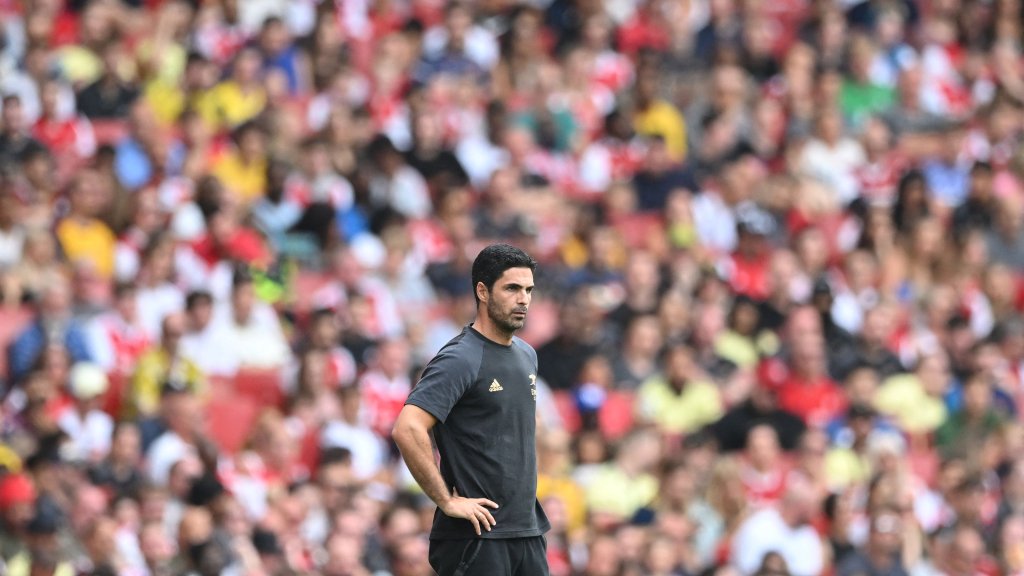
Photo / @Arsenal via Twitter
These observations may seem harsh, and I felt that way when writing, however I am harsh on this team because my expectations are high, and I believe in them and the manager to achieve greatness. It is important that incidents within games do not become patterns, eventually manifesting themselves as long term soft characteristics about the team – and a defensive frailty is the worst of the lot.
How will Bournemouth look to hurt Arsenal’s confident start to the season?
Scott Parker is certainly underrated in my eyes as a coach, for me he demonstrates a far more promising present and future in management than his other English counterparts such as Steven Gerrard and Frank Lampard. Parker has a strong and rigid style which matches his tough persona as a player, often deploying a back three or five, utilising both systems so far in the two opening games of the season. His teams have strong principals, and with the quality of the squads at his disposal (including here at Bournemouth), a lot of the big results he collects are a result of resolute defending, bravery from attacking players, and tactical nuances. Parker’s last meeting with Arteta saw the Englishman come away with a more positive result, back in 2021 when his Fulham side fought for a 1-1 draw at the Emirates, where Arsenal scored a 97th minute equaliser. Here is how he may lineup on Saturday evening…
Bournemouth:

Made by chosen11.com
Injuries: Jordan Zemura (COVID), Dominic Solanke (Ankle), Ryan Fredericks (Calf), Joseph Rothwell (Thigh), David Brooks (Medical Recovery).
Suspensions: N/A
Bournemouth opted for a 3-4-2-1 in their recent visit to The Etihad, although after a 4-0 demolition by the champions, Parker himself admitted that Pep Guardiola’s side were “just too good” for the Cherries to handle. However, in Parker’s opening day 2-0 success against Aston Villa, the team played a 5-3-2, with the notable difference being the inclusion of left back Jordan Zemura, who is a doubt ahead of Saturday evening after struggling with COVID recently. Also in that line-up was Dominic Solanke, who had a great Championship season last term, although will miss Arsenal’s visit due to an ankle injury.
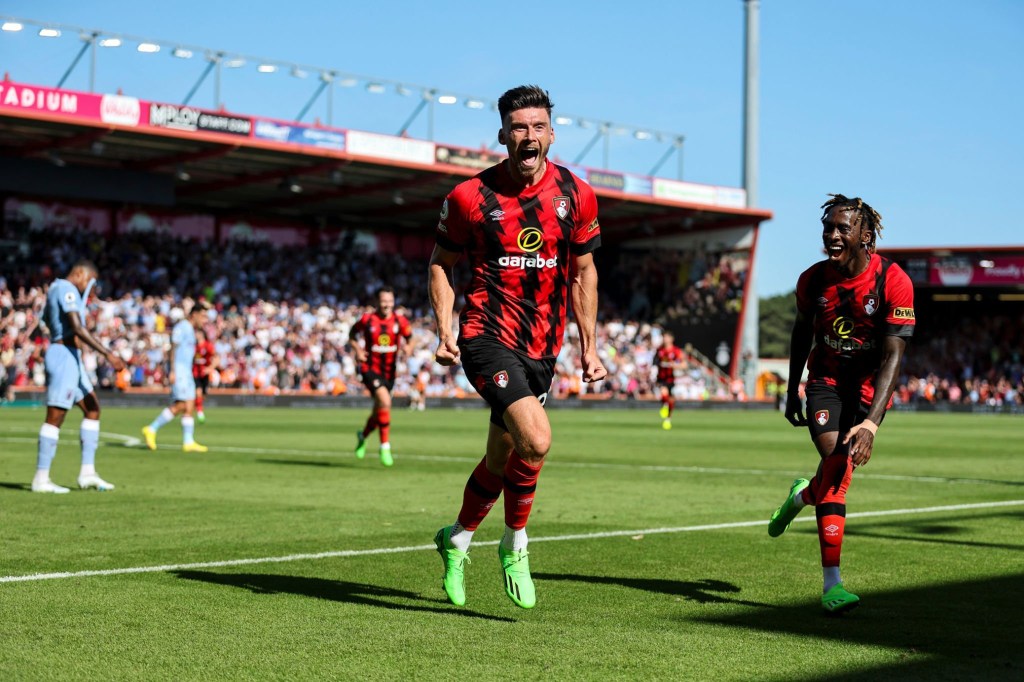
Photo / @iF2is via Twitter
Through a mixture of injuries and an attempt to get the best, most experienced members of the squad playing, Bournemouth have yet to show a settled XI or structure so far this season, hence the inclusion of new recruit Marcos Senesi, as well as Jamal Lowe, Phillip Billing, and Junior Stanislas as possible starters in my predicted XI. With Solanke out, it does feel that Welshman Kieffer Moore will struggle as the lone CF, opening up an opportunity for a change. Parker may also look to get Jefferson Lerma back into midfield from CB by including Senesi, especially against this well oiled, attacking Arsenal machine. A physical battle will certainly have to be relished by Arteta’s side if they wish to keep a clean sheet, and implement sustained pressure.
Some final thoughts on Arsenal…
Regardless of the enigma that is this Bournemouth side so far, I feel confident knowing that no matter how strong our opposition, at this stage in Arteta’s tenure I rarely find myself worried about how we will prevent the other team, focussing more on how Arsenal will win the game with their strengths. I think this system is good enough to dismantle any style of team when the players show the right intensity and act as a unit without the ball especially. Arsenal have a mix of measured buildup and individual brilliance, which can find its way around any defensive puzzle within a 90 minute spell.
Arsenal:
Made by chosen11.com
Injuries: Fábio Vieira (Ankle), Reiss Nelson (Muscular).
Suspensions: N/A
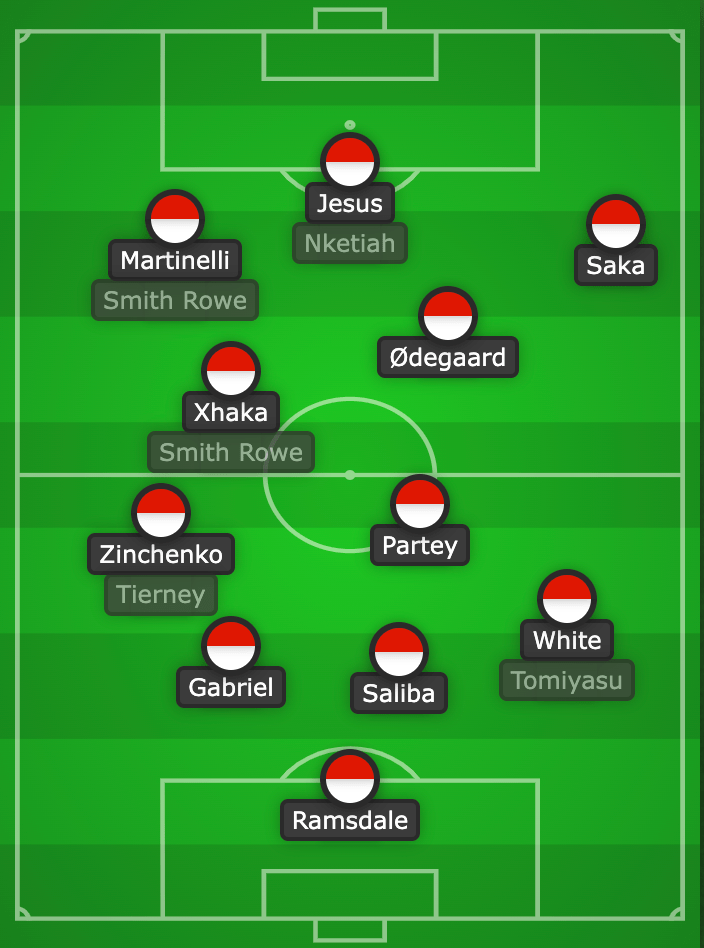
As for Arsenal’s lineup, I believe it will remain unchanged once again, with only Tierney and Tomiyasu’s return to fitness threatening any re-shuffle by Arteta, however with the form of the side, it is hard to see any re-integration of injured players being rushed. This squad is blessed with the depth to allow for players to take their time when returning to the fold, with the same luxury being afforded to Emile Smith Rowe and Fábio Vieira – who both partook in the Arsenal U-21 sides triumph over Swansea’s U-21 on Wednesday evening, to rebuild fitness and match sharpness.

Photo / @davidhickman14 via Twitter
It feels as though Vieira is still a way from playing, although interestingly the highly adaptable Portuguese may well be used as an interior in midfield, replacing Xhaka in our best XI, as the attacking positions that Xhaka find himself in would suit Vieira’s game far better, adding another creative tool to pick the locks of opposition defences. This is a particularly exciting prospect in games against weaker opposition, especially when you factor in Zinchenko’s ability to invert and cover the central zones left vacant by the LCM.
Smith Rowe on the other hand, is much further along the injury timeline, and a cameo is more than likely from the bench on Saturday to get him back up to speed. On that same note, Nketiah has so far been a victim of the productivity and sensational form of Jesus and particularly Martinelli early in the season, preventing him from starting. This is a shame because as I’ve reiterated many times, Eddie has a big season ahead of him where he will certainly pleasantly surprise many, although his mentality leads me to believe he will stay patient and hungry whilst he works his way into the XI.
I am hopeful that Saka will regain some confidence on Saturday too, as the one negative to the system currently is his isolation on the touchline of the RW, as a result of the lack of attacking combinations from his fullback and from Ødegaard’s lacklustre supporting movement in the opening two games. Saka has looked quiet by his sky-high standards but I am not worried about him, he has created chances and certainly impacted our wins positively, even without goals and assists – which is arguably the biggest sign of a top player.
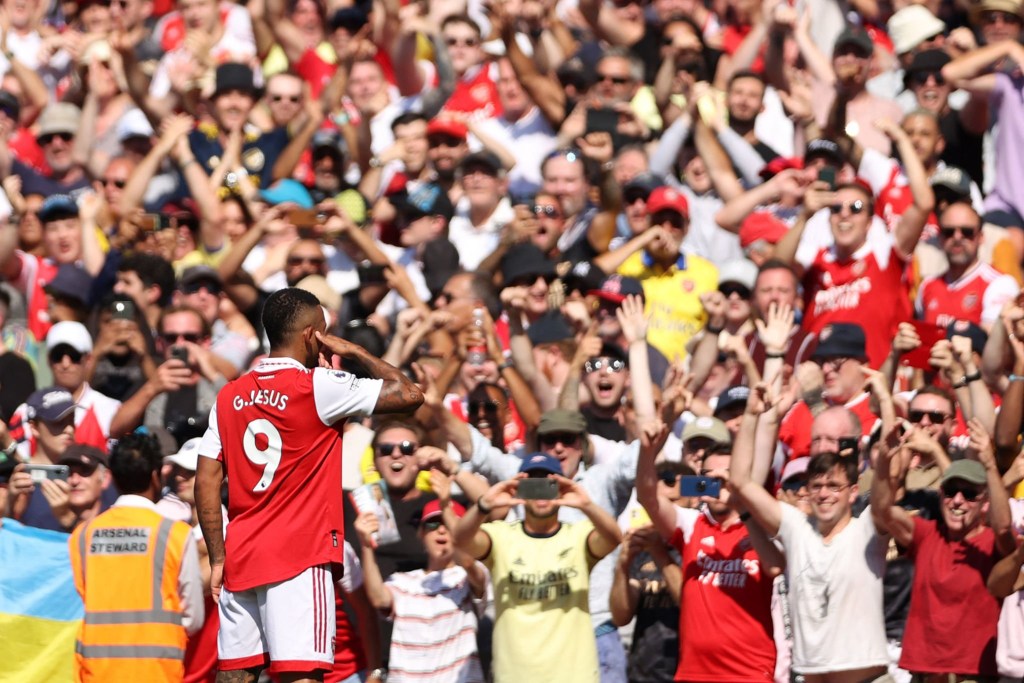
Photo / @iF2is via Twitter
Overall, Saturday cannot come soon enough for me, Arsenal look brilliant and each game is a pleasure to watch at this moment in time. The connection between the fans and club is at an all time high in Arteta’s reign, and the positivity surrounding the performances will serve to maintain the high standards.





 Joe Writes Football